Agribusiness and fertilizers
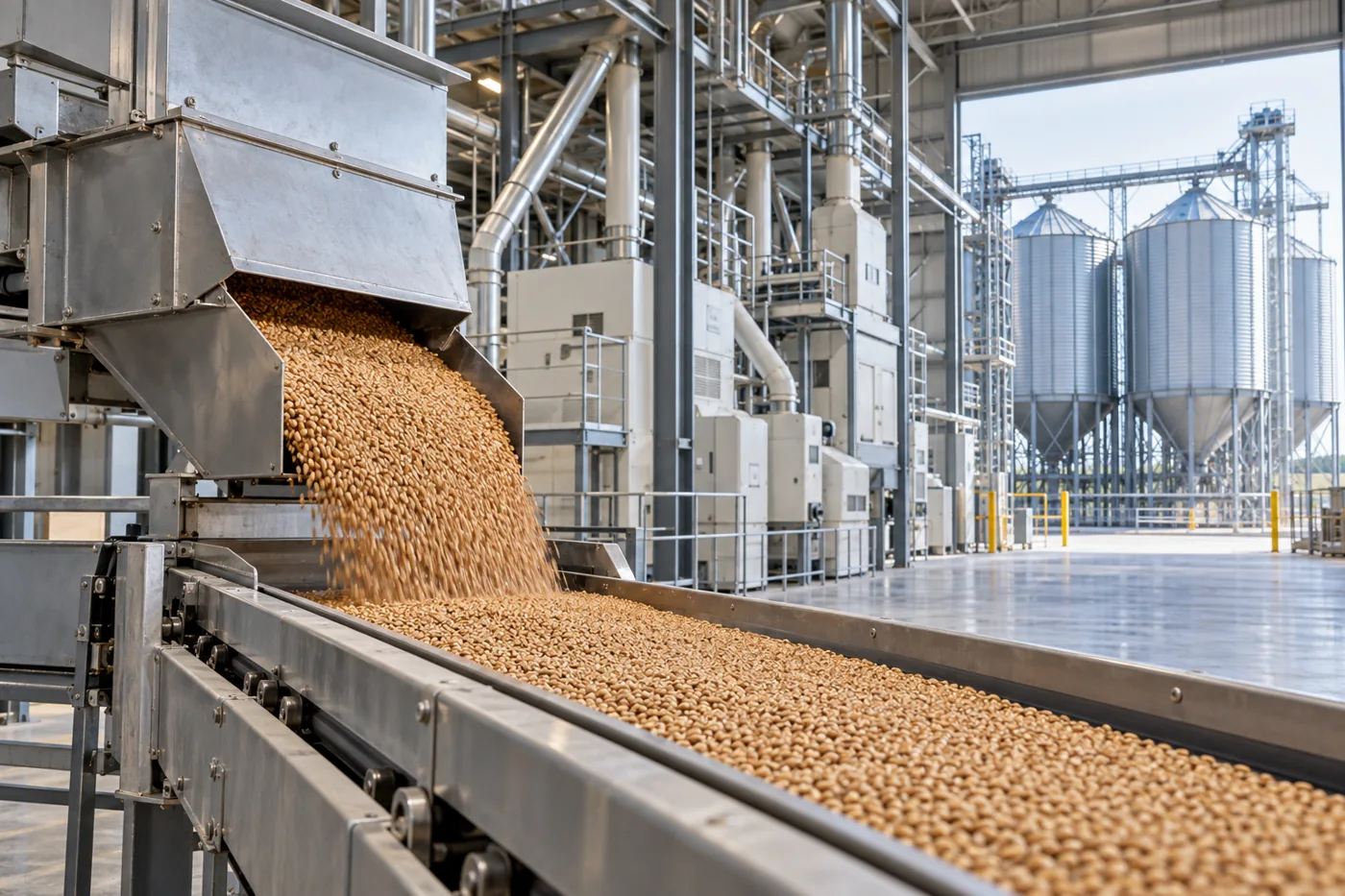
Fans for grain storage and pneumatic conveying
Storage aeration, dust aspiration and pneumatic conveying have different airflow and pressure requirements. Selection must consider the function of each circuit without using a single reference for all of them.
The process and emission sources
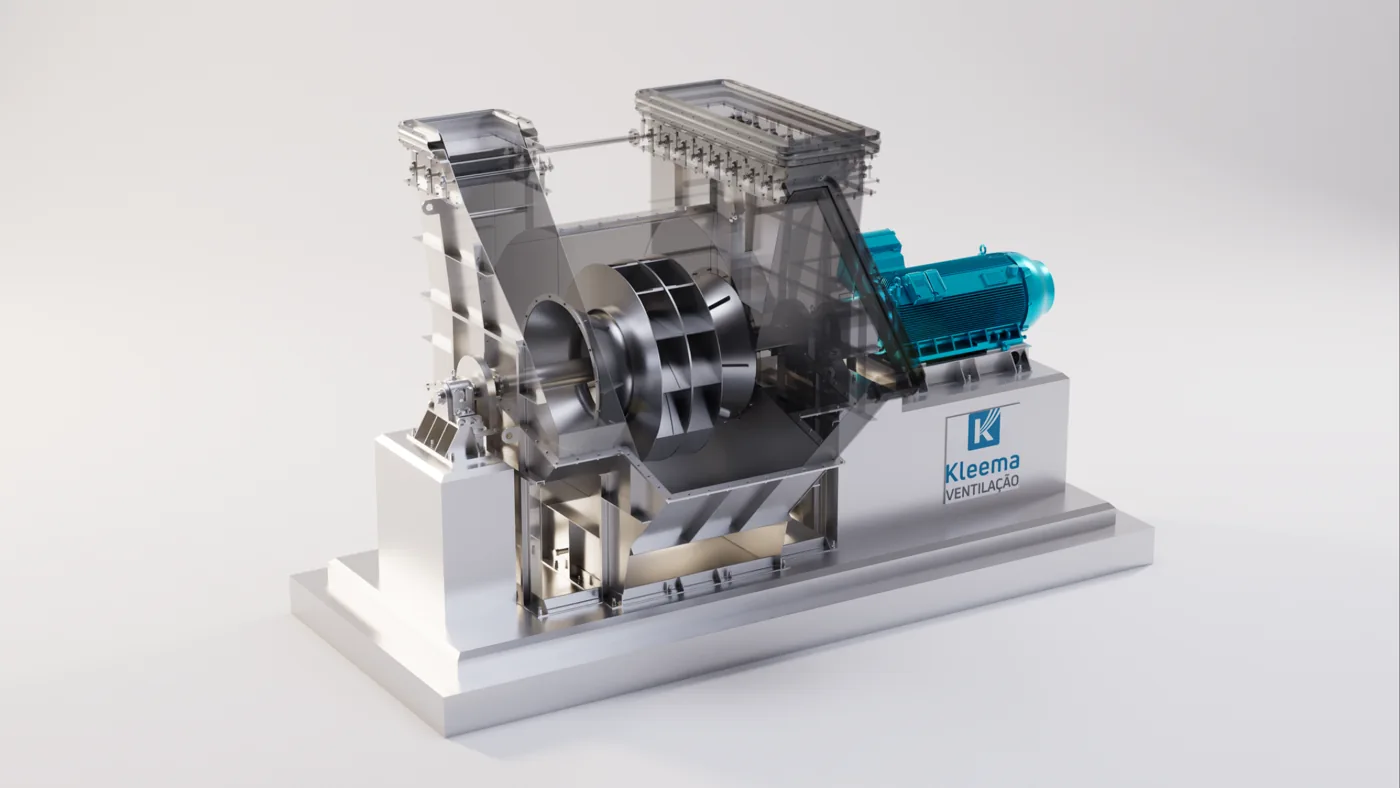
Aeration aims to distribute air through a grain mass; aspiration removes dust at localized sources; pneumatic conveying moves solids in an air stream. These three functions impose different resistances, airflows and constraints. Sizing must identify the function before selecting fan type and size.
In conveying, bends, separators, feeders and solids concentration influence the required pressure. In aeration, bed resistance varies with material condition and height. In dust extraction, enclosure and simultaneous operation of sources help define the required airflow.
Characteristics that guide engineering
In conveying, solids concentration and duct velocity influence wear, pressure drop and product integrity. Grain passing through the impeller requires a compatible design and must not be assumed to be acceptable.
Solution configuration and sizing
The fan must be selected for the operating range, with attention to the power required when resistance changes. Curve reference conditions must be matched to stream temperature and density. In pneumatic conveying, the positions of the fan and separator determine whether solids can reach the impeller.
Feed valves and airtight discharges help control air and product entry, but must suit the grain, pressure and capacity. Fragile material passing through rotating equipment may break and generate fines. The design must reconcile conveying with product integrity and management of the associated combustible dusts.
Design parameters
| Parameter | How to assess it | Engineering decision |
|---|---|---|
| Ventilation function | Distinguish aeration, aspiration and conveying | Define airflow and pressure for each purpose |
| Solids in the circuit | Check feeding and separation | Protect product and impeller |
| Variable resistance | Assess material and route | Check operating range and power |
- Define the purpose of the circuit.
- Calculate resistance with material present.
- Check filters and separators.
- Assess combustible dust risk and maintenance conditions during harvest.
Performance, diagnostics and maintenance
In aeration, airflow must be verified under actual storage conditions; a measurement with air discharging freely does not represent the complete circuit. In conveying, capacity, feeding stability, deposition and fines generation must be observed. In aspiration, the focus includes capture at sources.
Consumption must be compared against the function actually delivered, such as conveyed capacity or aeration demand, rather than motor rated power alone. Changes to routing or material require a system review, as they may alter the operating point and conveying conditions.
Preserving the product
Conveying velocity and route must be compatible with material fragility. Analysis must consider fines generation, segregation and the need for product separation as well as nominal handling capacity.
Further technical reading
Does your process need an assessment?
Talk to Kleema engineering about sizing, modernization and operating conditions.
Talk to engineering ↗