Agribusiness and fertilizers
Filtration in grain dryers: temperature, moisture and dust control
Grain drying combines heated air, changes in moisture and particle entrainment. The extraction system must capture this material without interfering with the drying regime and must accommodate variations throughout the harvest season.
The process and emission sources
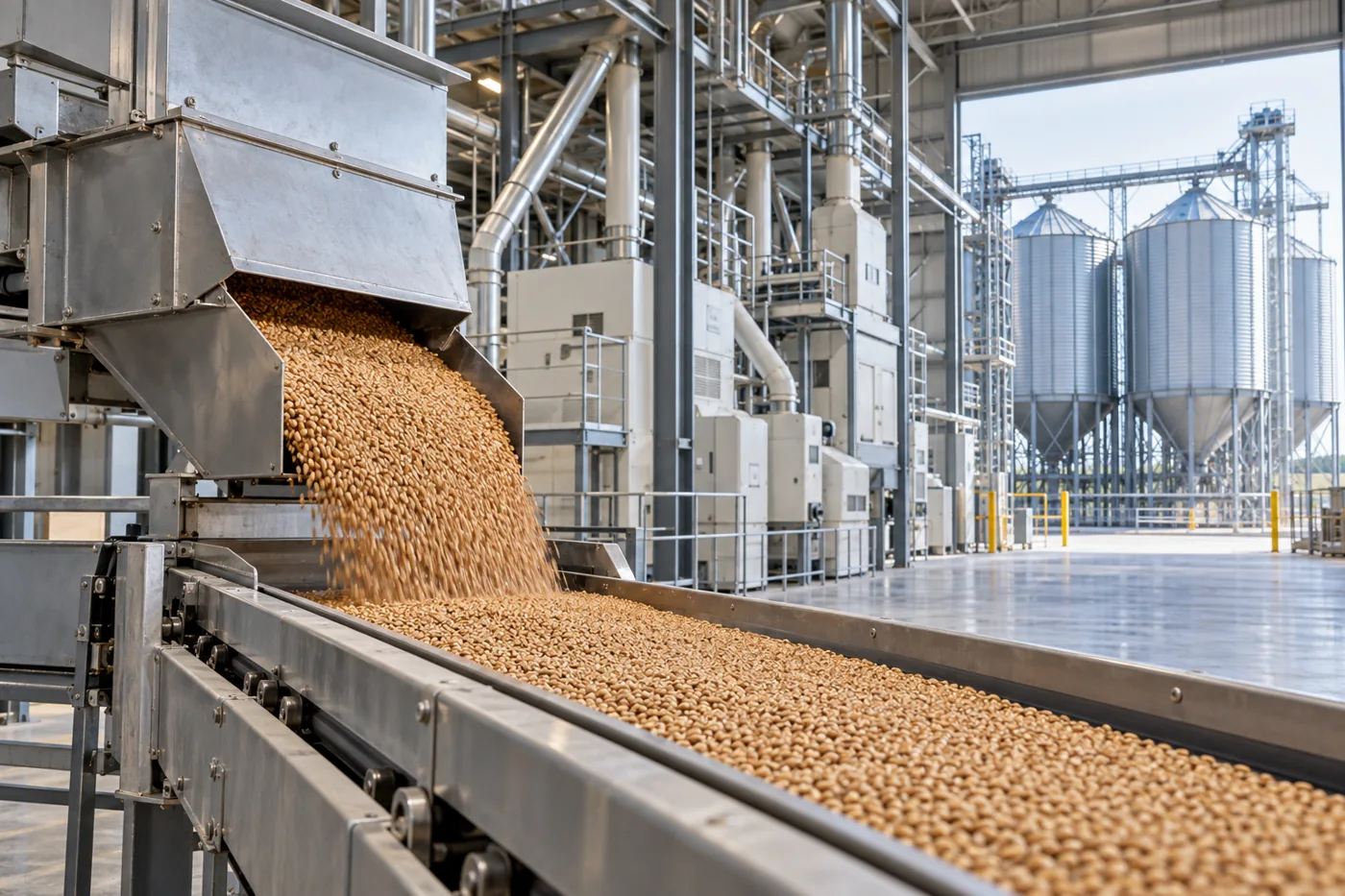
In the dryer, air passes through the grain mass and carries some of the husks, fragments and fines released by handling. The condition of this stream changes with the grain species, cleaning before drying, inlet moisture and capacity utilization. As a result, the same nominal airflow may reach the collector with markedly different dust loads and moisture levels throughout the harvest season.
It is important to distinguish process extraction from aspiration at elevators, conveyors and discharge points. Combining streams without balancing them can alter dryer draft, cause condensation in cold sections or transfer a hazardous condition to other equipment.
Characteristics that guide engineering
Temperature and dew point must be assessed together. Condensation encourages dust adhesion and can compromise cleaning of the filter elements. The choice of filter medium also depends on particle size distribution and material composition.
Solution configuration and sizing
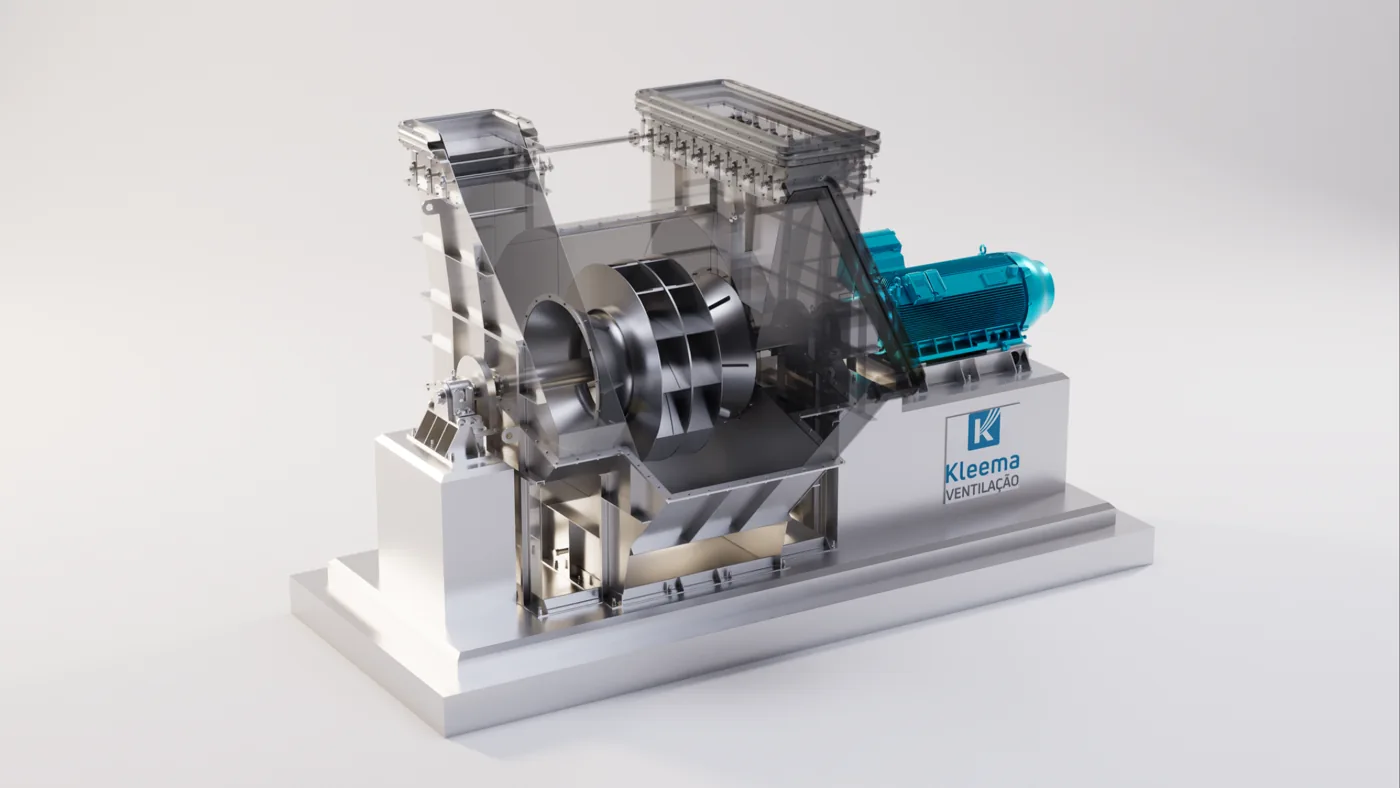
The configuration may combine pre-separation, a filter and a fan, but each stage must have a justified function. A cyclone can reduce the presence of larger particles; it does not replace fines collection and should not be regarded as complete protection against ignition. Capture must preserve the dryer's operating condition without drawing off more product than necessary.
In the filter, the air-to-cloth ratio must reflect the dust and cleaning capacity, while internal velocities must allow released material to reach the hopper. Insulation and construction details must prevent cold surfaces and water ingress. Discharge capacity must accommodate peak collection rates, rather than average production alone.
Design parameters
| Parameter | How to assess it | Engineering decision |
|---|---|---|
| Temperature and moisture | Characterize steady operation and transients | Identify condensation and filter bag compatibility |
| Airflow and dust loading | Measure under dryer operating conditions | Determine area and cleaning capacity |
| Solids discharge | Observe accumulation and peaks | Prevent dust re-entrainment and blockages |
- Characterize operating airflow and its peaks.
- Provide access for inspection and bag replacement.
- Integrate cleaning and discharge to prevent accumulation.
- Assess dust combustibility and the applicable protective measures.
Performance, diagnostics and maintenance
A system may have low stack emissions and still capture poorly at the sources. Assessment must consider both aspects: retention in the collector and capture before dispersion. Monitoring differential pressure, cleaning frequency and instances of adhered dust is also useful.
When pressure rises after a change in weather or product, the initial investigation should include temperature and moisture before pulse pressure is increased. More aggressive cleaning does not correct condensation and may accelerate filter bag wear. The aim is to provide stable support for drying, without promising a single collection percentage for every harvest.
Verification during the drying campaign
After adjustments, capture at emission points, differential pressure trends and dust flow through the hoppers must be monitored. Comparing different dryer loads helps identify conditions in which an adjustment that is satisfactory under normal steady operation no longer meets operating needs.
Further technical reading
Does your process need an assessment?
Talk to Kleema engineering about sizing, modernization and operating conditions.
Talk to engineering ↗