
Industrial air and gas treatment
Filtration systems
Integrated solutions for capture, conditioning, and treatment of industrial air and gas streams.
Request an application assessment ↗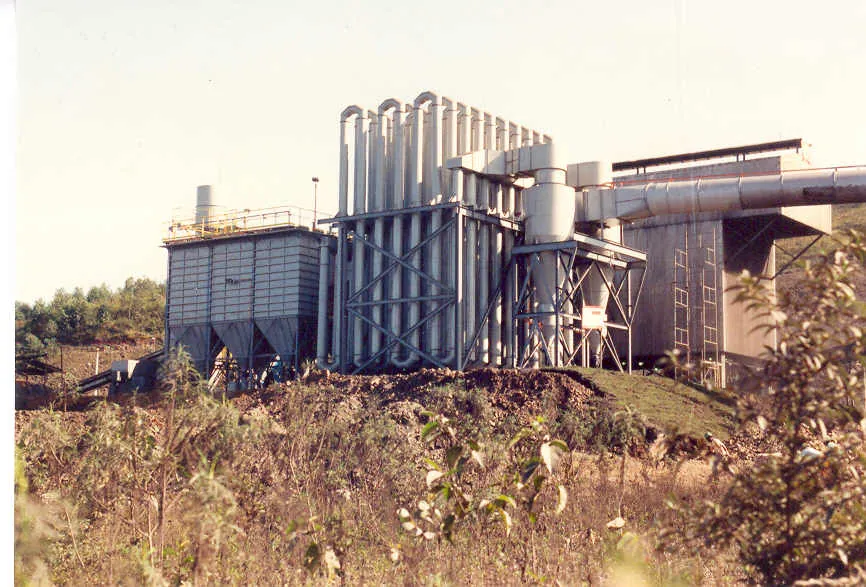
Equipment integrated to meet each process's requirements
Filtration system performance depends on integration of capture, gas conveying, conditioning, and contaminant separation. Kleema develops solutions considering flow rate, gas temperature and composition, particulate material characteristics, and installation operating conditions.
Depending on the application, the system may incorporate pre-collectors to reduce particulate loading reaching the filter, coolers to adjust gas temperature, and reaction towers to bring gases into contact with reagents for treating specific contaminants.
This equipment is selected and sized together with filters, ducts, fans, and discharge devices to achieve treatment efficiency, operational reliability, and ease of maintenance.
Filtration system — Ferbasa
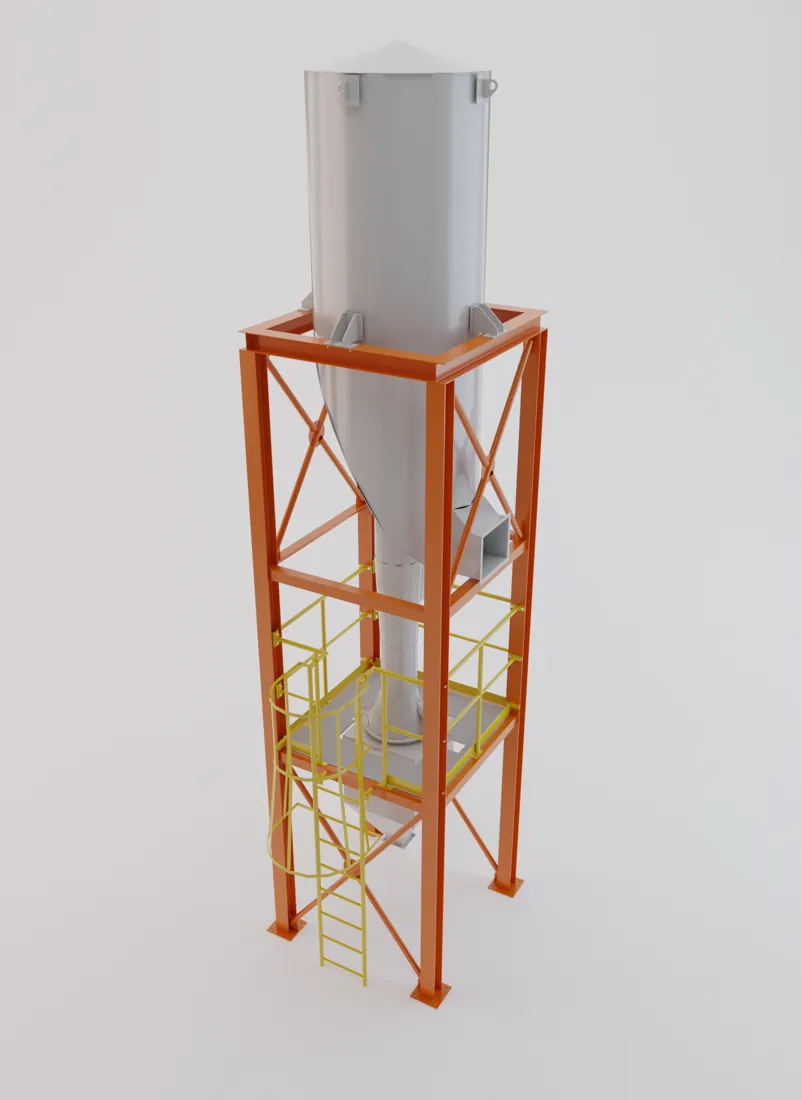
Pre-collectors
Preliminary separation to reduce filter loading
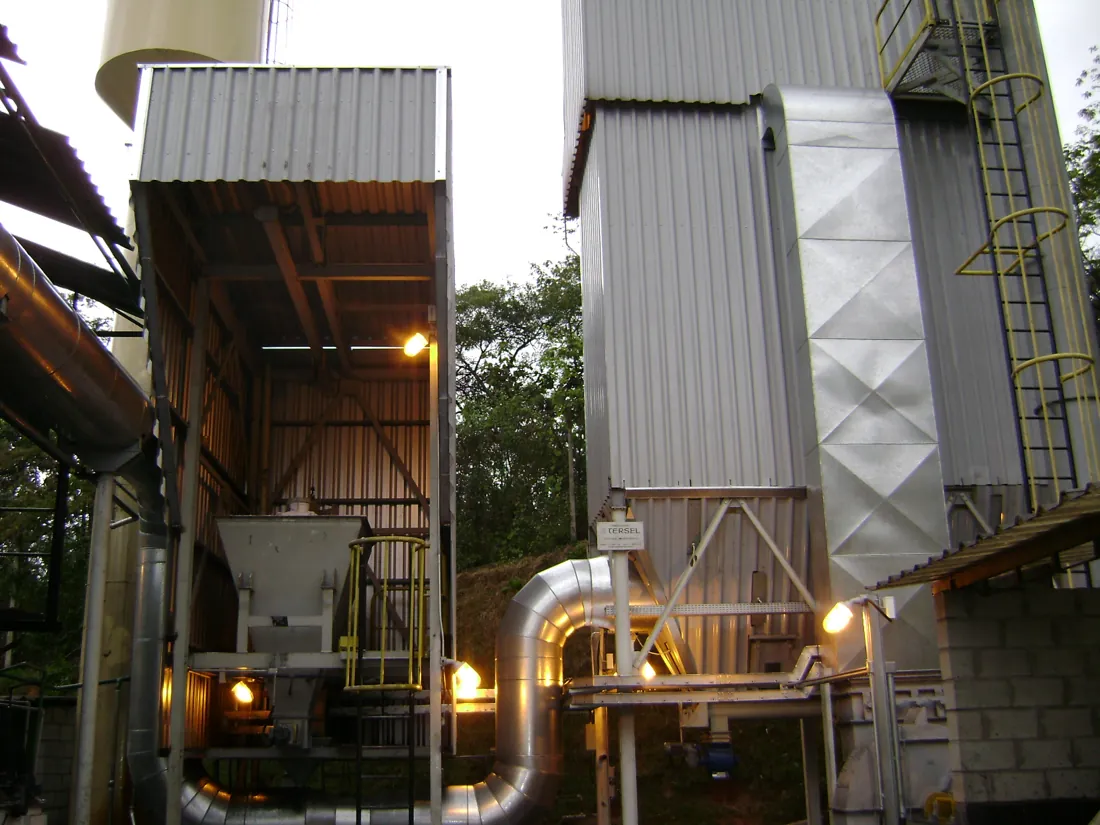
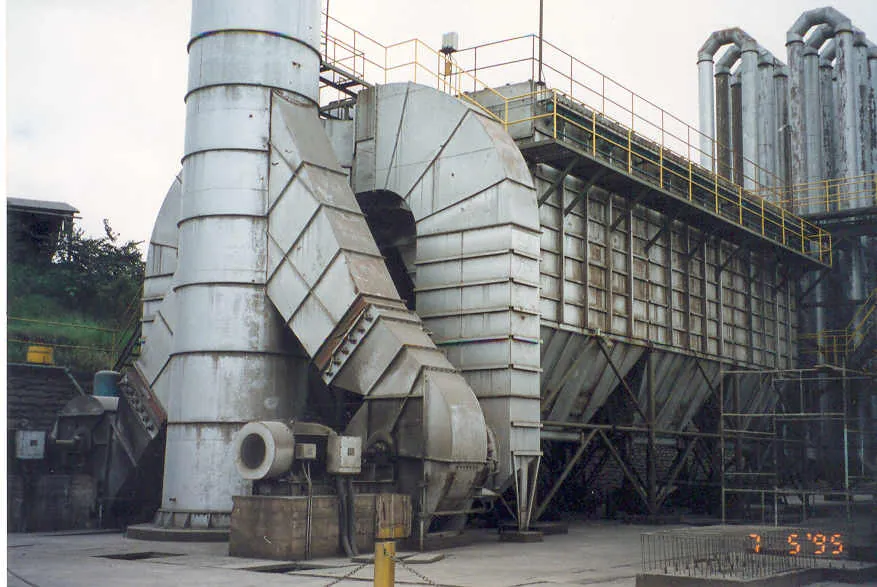
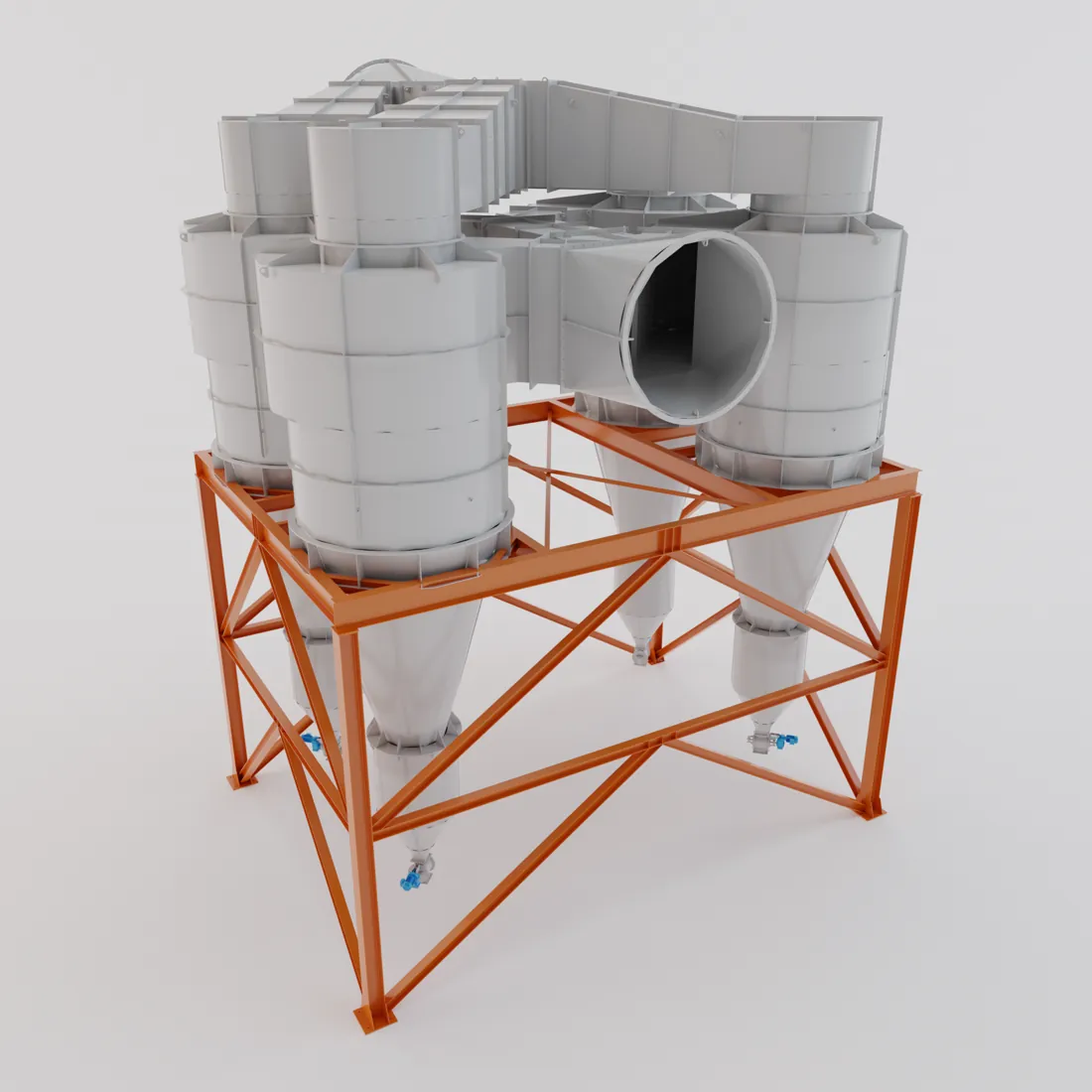
Pre-collectors are installed upstream of filtration equipment and may be cyclones or spark arrestors, according to process requirements. Cyclones separate part of the particulate in the air or gas stream, while spark arrestors retain sparks and glowing particles before they reach the filter.
This stage can reduce dust loading on filter elements, wear, and cleaning demand, while helping protect the system according to the equipment used.
Selection considers flow rate, particle characteristics, abrasiveness, temperature, and the presence of glowing material. Configuration also includes separated material discharge and integration with other system equipment.
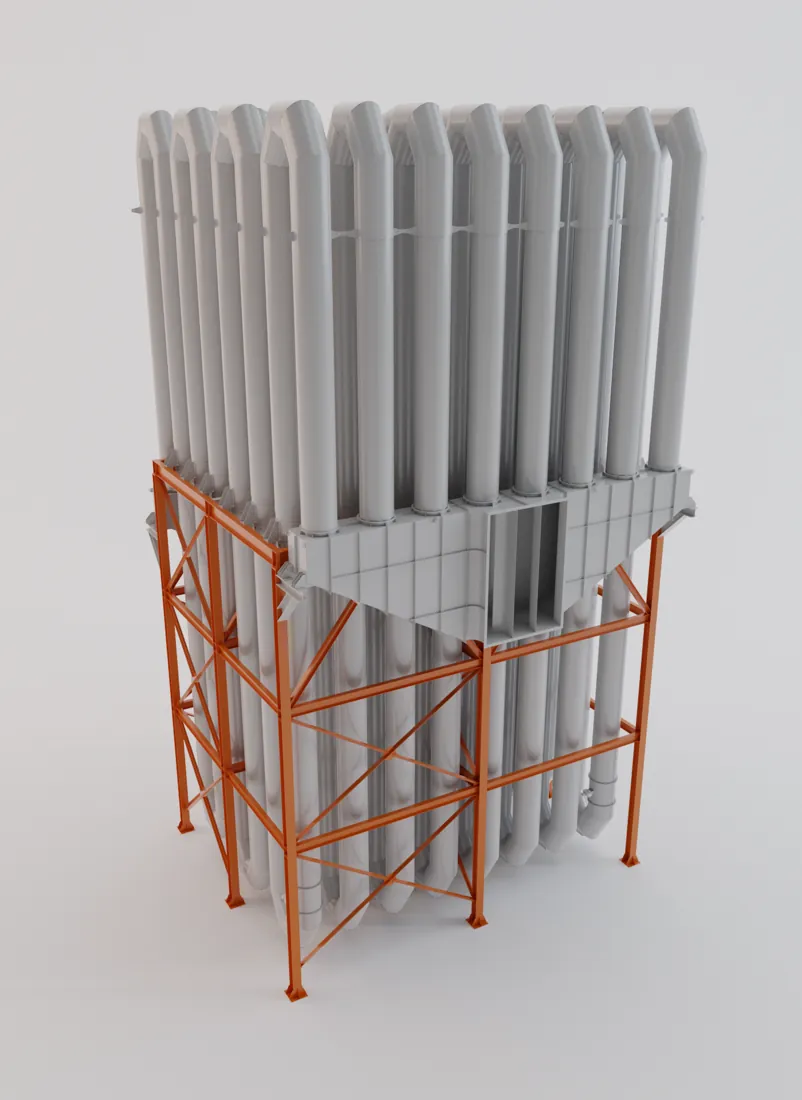
Gas coolers
The right temperature for reliable filtration
Coolers reduce gas temperature before entry into the filter, bringing the stream within the operating conditions of filter elements and other system components. Natural convection, forced convection, or water spray coolers may be used according to the application.
Sizing considers flow rate, inlet and outlet temperatures, gas composition, and particulate content. Technology selection also accounts for utility availability and moisture control, with attention to condensation, corrosion, and material adhesion risks.
Integration with the filtration system aims for thermal stability, component protection, and operational reliability.
Reaction towers
Contaminant treatment integrated with filtration
Reaction towers bring the gas stream into contact with reagents or adsorbents selected for contaminant treatment. Main targets include dioxins and furans, heavy metals, and oxides with acid-forming potential.
Treatment selection considers each contaminant's removal mechanisms, including adsorption and neutralization. Towers work with the filtration stage, which retains particulate matter and solid treatment products.
Design considers gas composition and flow rate, operating temperature, reagent and adsorbent characteristics, distribution, and contact time. Configuration also covers integration with dosing and collected residue discharge.
Engineering for overall system performance
- Process characterizationFlow rate, temperature, gas composition, particulate concentration, and operating duty guide treatment stage selection.
- Integration and sizingPre-collectors, coolers, reaction towers, and filters are sized together with ducts, fans, and discharge devices, considering pressure losses and conditions at each stage.
- Operating condition controlInstrumentation and controls are defined for the application, including monitoring of temperature, pressure, and reagent or adsorbent dosing where used.
- Installation and maintenanceThe arrangement considers available space, plant interfaces, and access for inspection, cleaning, component replacement, and removal of collected residues.
Integrated treatment for different industrial processes
Kleema filtration systems serve processes requiring particulate control, gas temperature adjustment, or treatment of specific contaminants. The equipment combination is defined for each application's characteristics.
Main applications
- Dust collection in crushing, grinding, screening, and material transfer operations.
- Treatment of gases from kilns, dryers, and other thermal processes.
- Gas conditioning before filtration.
- Integrated treatment of particulate and gaseous contaminants, using reagents or adsorbents when necessary.
Industries
Technical information
Specification starts with process conditions and treatment requirements, considering integrated operation of all equipment.
| Flow rate and operating duty | Design flow rates, reference conditions, and expected operating variations. |
|---|---|
| Temperature and moisture | Inlet and stage conditions, cooling needs, and condensation risk. |
| Particulate material | Concentration, particle size distribution, abrasiveness, adhesion, and presence of glowing particles. |
| Gas composition | Contaminants present, their concentrations, and removal requirements. |
| Pre-collection and conditioning | Selection of cyclones, spark arrestors, and cooling technologies for the application. |
| Reagents and adsorbents | Type, dosage, and contact conditions defined for the contaminants to be treated. |
| Filtration and extraction | Filter element selection, filter area, pressure losses, and fan sizing. |
| Residues and maintenance | Discharge and destination of collected materials, access, and inspection and maintenance requirements. |
Filtration systems
An integrated solution for your process gases
Share your installation's operating conditions, gas characteristics, and treatment requirements. Kleema engineers can assess the equipment combination suited to the application, from pre-collection and conditioning through filtration and collected material discharge.