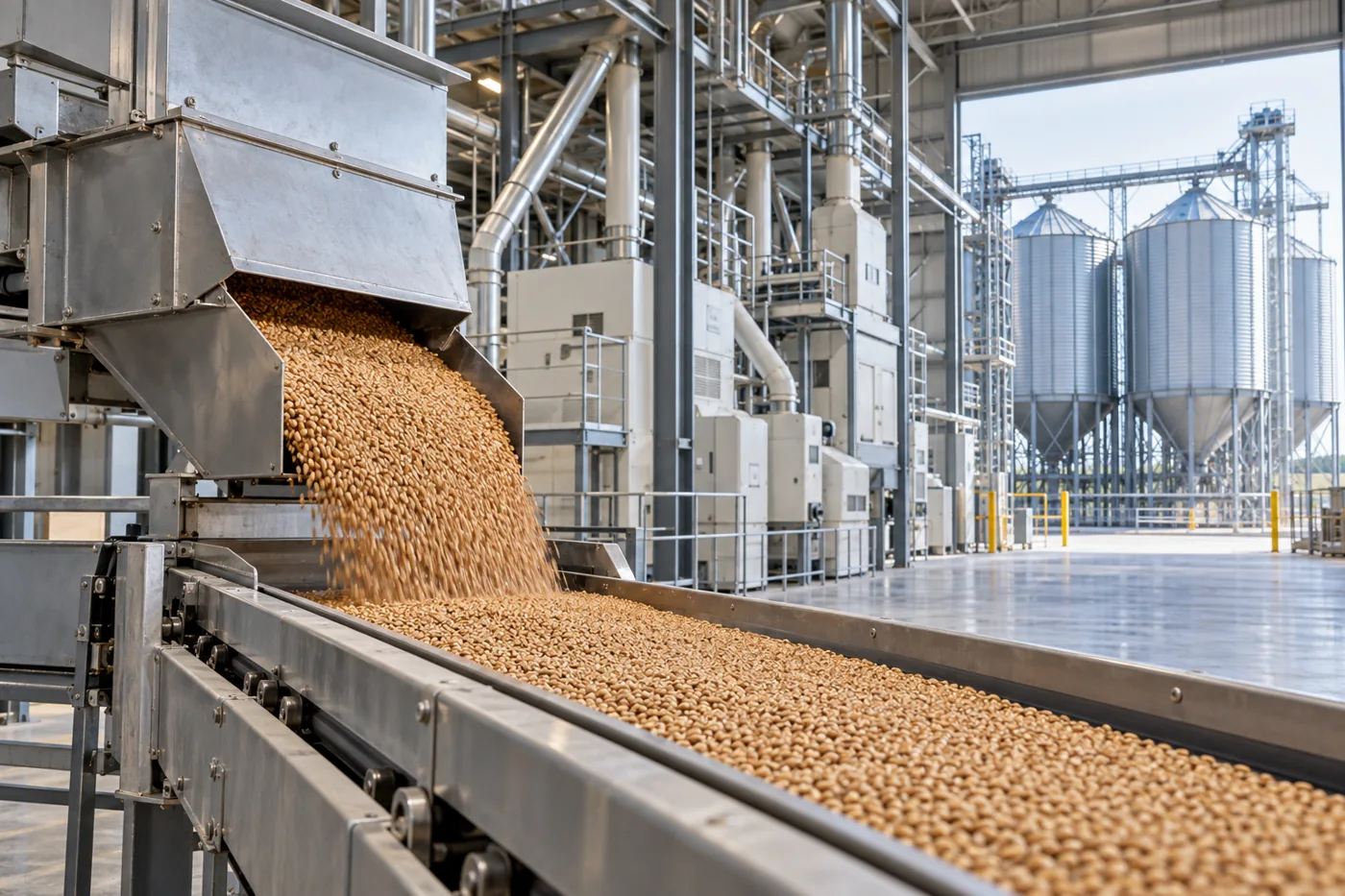
Agribusiness and fertilizers
Fans in fertilizer production: selection for corrosive atmospheres
Vapors, dust and moisture present in fertilizer manufacture can attack casings, impellers and seals. Fan selection must begin with stream composition and its actual operating conditions.
The process and emission sources
In fertilizer manufacture, a fan may move dust extraction air or streams containing vapors and corrosive substances. Its position in the process matters: upstream or downstream of a collection or treatment stage, the composition it receives can change significantly.
The effects of moisture are not limited to uniform corrosion. Deposits can retain liquid in localized areas, encourage attack beneath the adhered layer and increase the mass accumulated on the impeller. Startups and shutdowns also require attention, since cold surfaces can reach conditions not observed during continuous operation.
Characteristics that guide engineering
Stainless steel and coatings do not provide universal resistance. The choice depends on agents, concentrations, temperatures and wear mechanisms. Simultaneous corrosion and abrasion may require different solutions in the most heavily affected regions.
Solution configuration and sizing
Selection must combine the aerodynamic curve with materials analysis. 304 stainless steel, 316 stainless steel and coatings behave differently according to the agent, its concentration and temperature. The term corrosion-resistant describes a design purpose, rather than an unlimited property. Where corrosion and abrasion occur simultaneously, different regions may need protection through specific solutions.
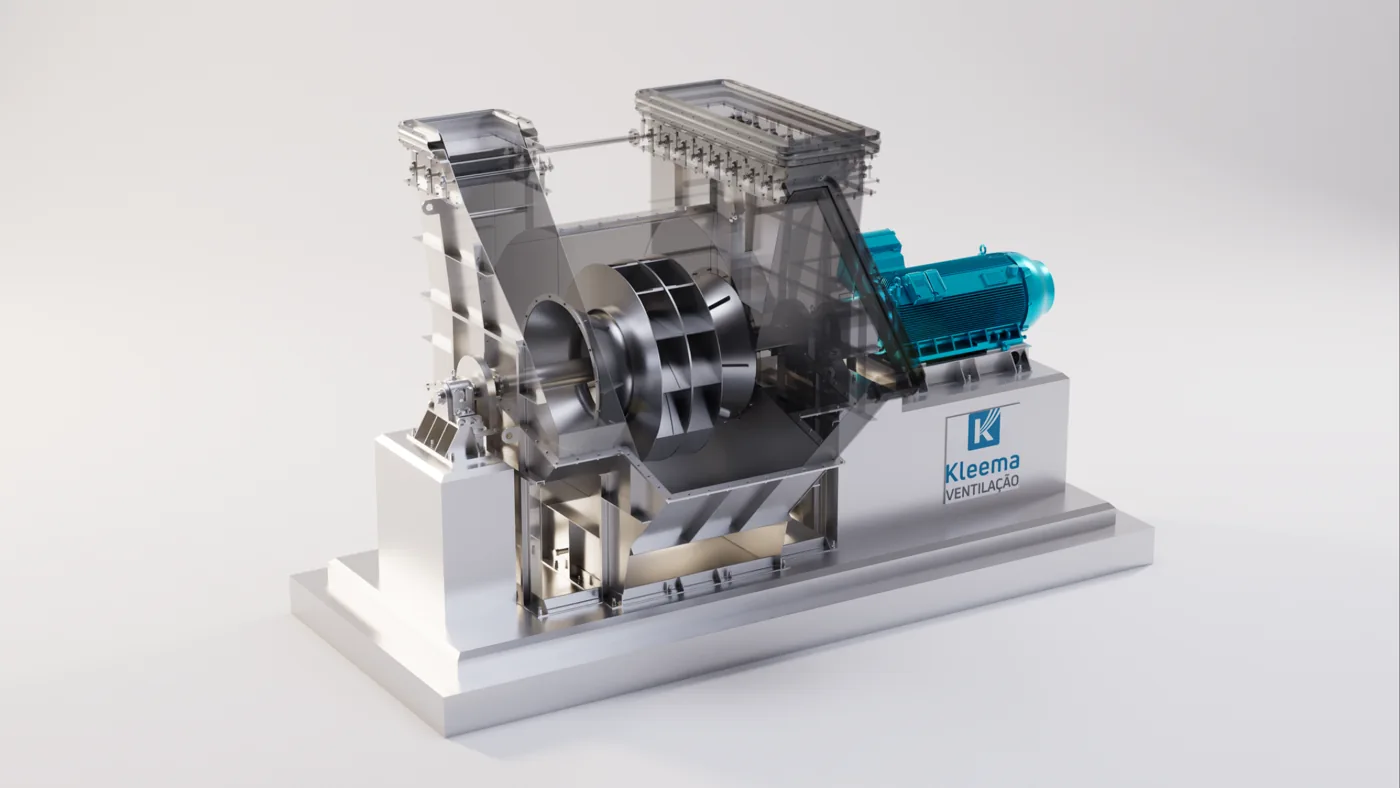
Shaft sealing, connections, drainage where applicable and inspection access are integral to construction. Rotational speed and impeller geometry must achieve the required operating point without compromising mechanical strength. Materials selection must also consider the possibility of cleaning and repair throughout service life.
Design parameters
| Parameter | How to assess it | Engineering decision |
|---|---|---|
| Composition and moisture | Characterize before and after treatment | Define required chemical resistance |
| Deposits and thickness | Inspect critical regions | Distinguish accumulation from material loss |
| Curve and speed | Check using process gas conditions | Match efficiency and strength |
- Specify gas composition and temperature.
- Check deposits and the possibility of condensation.
- Select impeller and sealing.
- Provide thickness and vibration inspections. Construction material does not replace ignition risk analysis.
Performance, diagnostics and maintenance
Thickness, coating condition, vibration and seal behavior must be observed together. Vibration can increase due to deposits before significant thickness loss occurs; corrosion can progress without producing an early vibration signal. No single indicator replaces all the others.
Comparison of alternatives must include shutdown frequency, ease of maintenance and replacement costs as well as purchase price. Where flammable components or combustible dusts are present, ignition risk requires a separate assessment: replacing the impeller with aluminum or stainless steel does not demonstrate protection of the assembly.
Inspection of critical regions
Deposits can alter fan behavior and conceal corrosion mechanisms. Inspections of surfaces, seals and drainage points, where provided, help relate wear to process conditions and plan interventions.
Further technical reading
Does your process need an assessment?
Talk to Kleema engineering about sizing, modernization and operating conditions.
Talk to engineering ↗