
Discharge and handling
Rotary airlocks
Durability, reliability, and sealing for particulate material discharge.
Request an application assessment ↗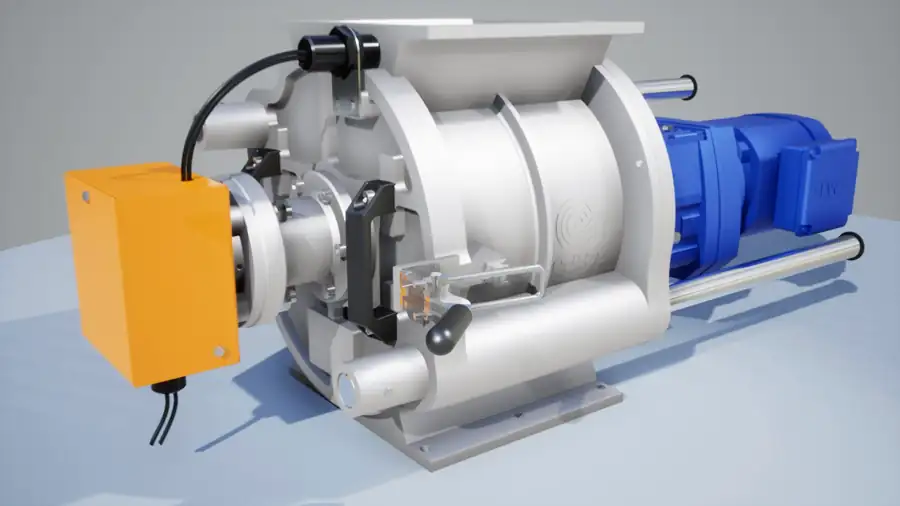
Particulate discharge
Durability, reliability, and sealing in particulate discharge
Kleema rotary airlocks are designed to combine wear resistance, consistent operation, and sealing during particulate discharge. Assembly construction, rotor-to-casing clearances, and sealing elements are defined to limit air passage and meet process conditions.
Material, rotor, and drive selection considers particulate abrasiveness, temperature, differential pressure, and operating duty. This approach aims to preserve valve performance throughout operation, reduce maintenance interventions, and support process continuity.
Rotary airlock installed beneath a hopper
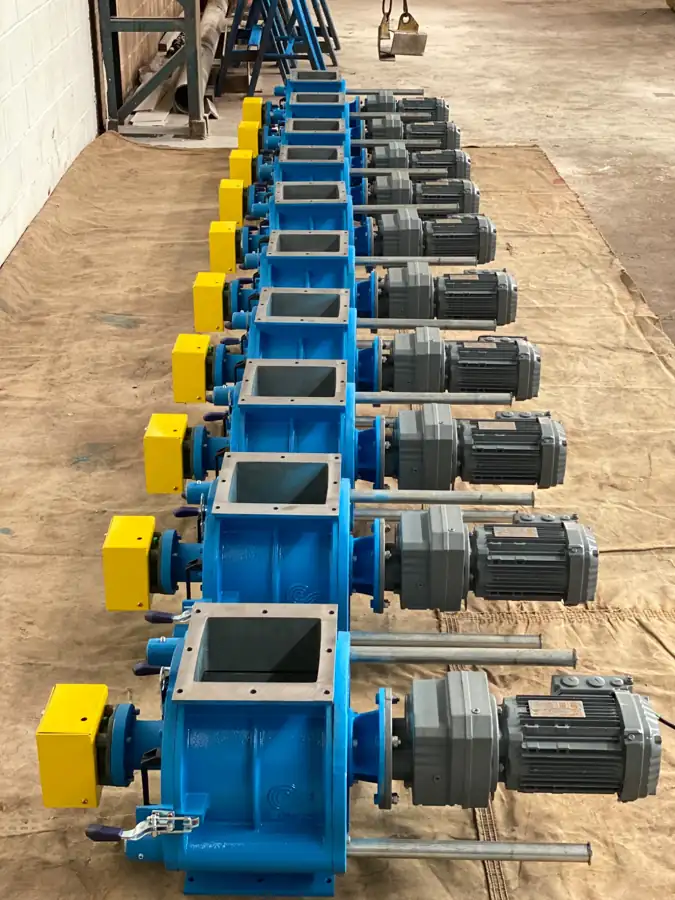
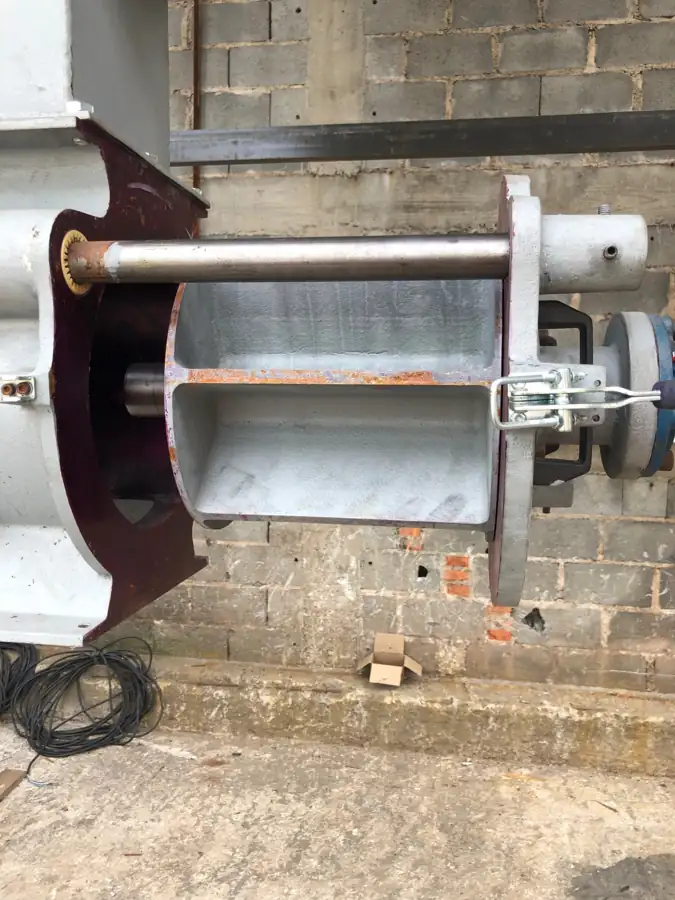
Engineering to preserve performance throughout operation
Rotary airlock configuration considers wear conditions, differential pressure, and operating duty. Each component is specified to support operating continuity and maintain sealing.
- Construction materialsSelected for particulate abrasiveness, temperature, and process corrosion conditions.
- Rotor and casingGeometry and clearances defined to combine material transfer, freedom of movement, and limited air passage.
- SealsConfiguration suited to pressure, temperature, and product characteristics, with attention to shaft sealing and assembly interfaces.
- DriveSized for discharge capacity, resistance to material movement, and operating duty.
- Inspection and maintenanceAccess and disassembly features considered to facilitate component assessment and necessary interventions.
In-house manufacturing allows materials and construction details to be adapted to abrasion, corrosion, and temperature conditions. Dimensional, assembly, and functional inspections consider sealing and consistent operation requirements.
Applications and industries
Kleema rotary airlocks are used beneath bag filters, cartridge dust collectors, cyclones, silos, and hoppers, combining particulate transfer with the need to limit air passage through the system.
They are suited to processes requiring consistent discharge, wear resistance, and reliable operation, with configurations adapted to each material's characteristics.
Application industries include:
Selection considers product particle size distribution, density, abrasiveness, temperature, and flow behavior, along with differential pressure and operating duty.
Technical information
Rotary airlock specification considers discharge capacity, required sealing, and wear and operating conditions.
| Discharge capacity | Material flow rate, bulk density, and valve feed conditions. |
|---|---|
| Particulate characteristics | Particle size distribution, abrasiveness, adhesion, and flow behavior. |
| Temperature and pressure | Operating temperature and inlet-to-outlet differential pressure. |
| Rotor and casing | Geometry, construction materials, and clearances suited to the application. |
| Seals | Shaft, cover, and interface configuration to limit air passage and material leakage. |
| Drive | Speed, torque, and operating duty compatible with required discharge. |
| Installation and maintenance | Connections, available space, and access for inspection and disassembly. |
Rotary airlocks
Shall we specify the valve for your application?
Provide the material, discharge capacity, and operating conditions. Kleema engineers can assess the configuration suited to your process's durability, reliability, and sealing requirements.