Selection by operating point
Flow rate, pressure, and gas density considered alongside system characteristics.

Industrial ventilation
Air and gas handling for industrial processes, with design and manufacturing tailored to flow rate, pressure, and operating conditions.
Request an application assessment ↗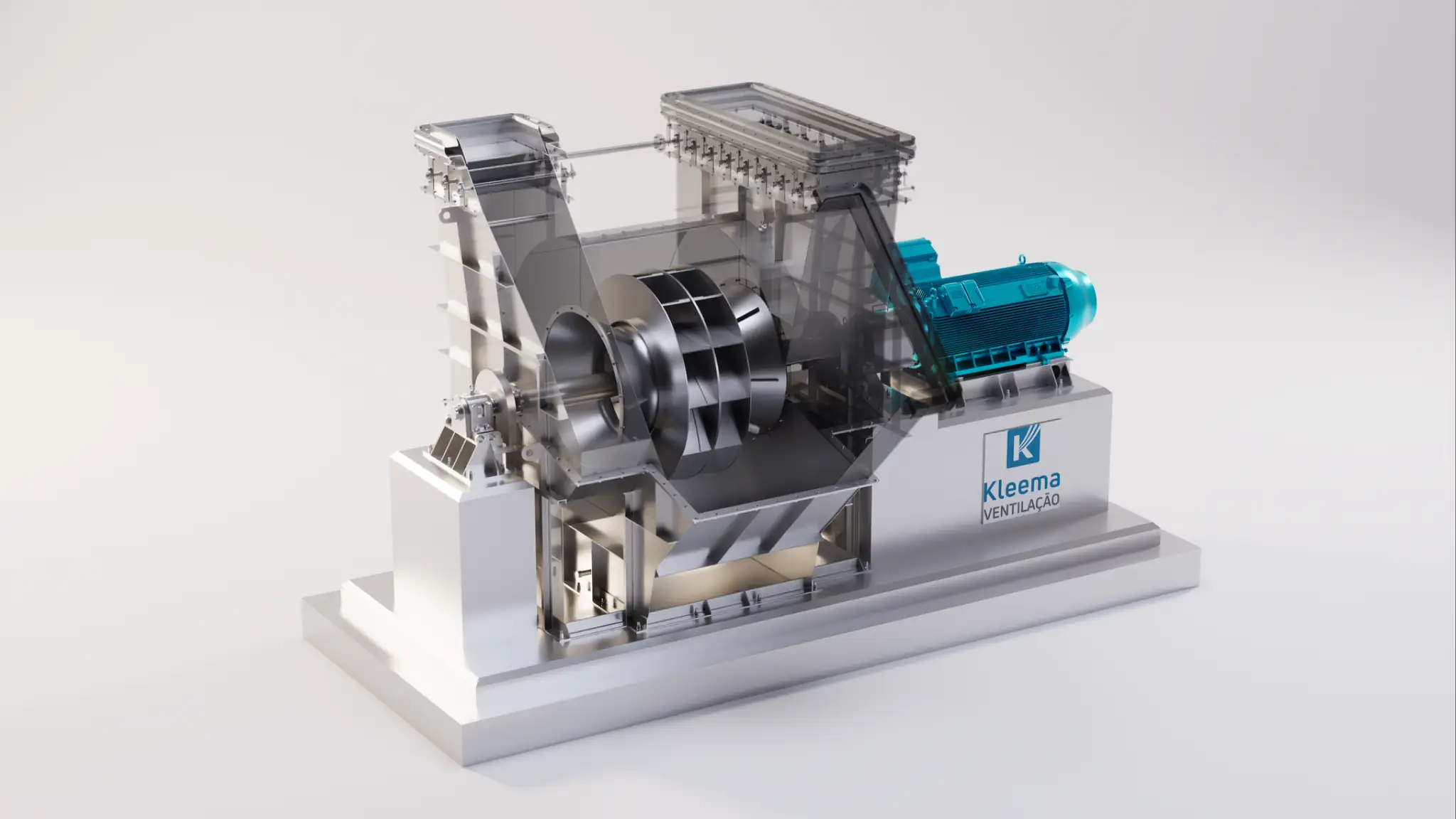
Kleema develops centrifugal fans for extraction, dust collection, and industrial gas handling systems. Sizing considers required flow rate, system pressure, temperature, and gas characteristics, guiding selection of the impeller, drive, and equipment construction configuration.
Design assesses the operating point and process variations to align aerodynamic performance, energy consumption, and mechanical requirements. Particulate content, wear conditions, and inspection and maintenance access also inform this definition.
Flow rate, pressure, and gas density considered alongside system characteristics.
Impeller and materials defined by temperature, particulate loading, and wear conditions.
Assessment of efficiency at the operating point and control features to respond to process variations.
Impeller during manufacturing — blades and inlet
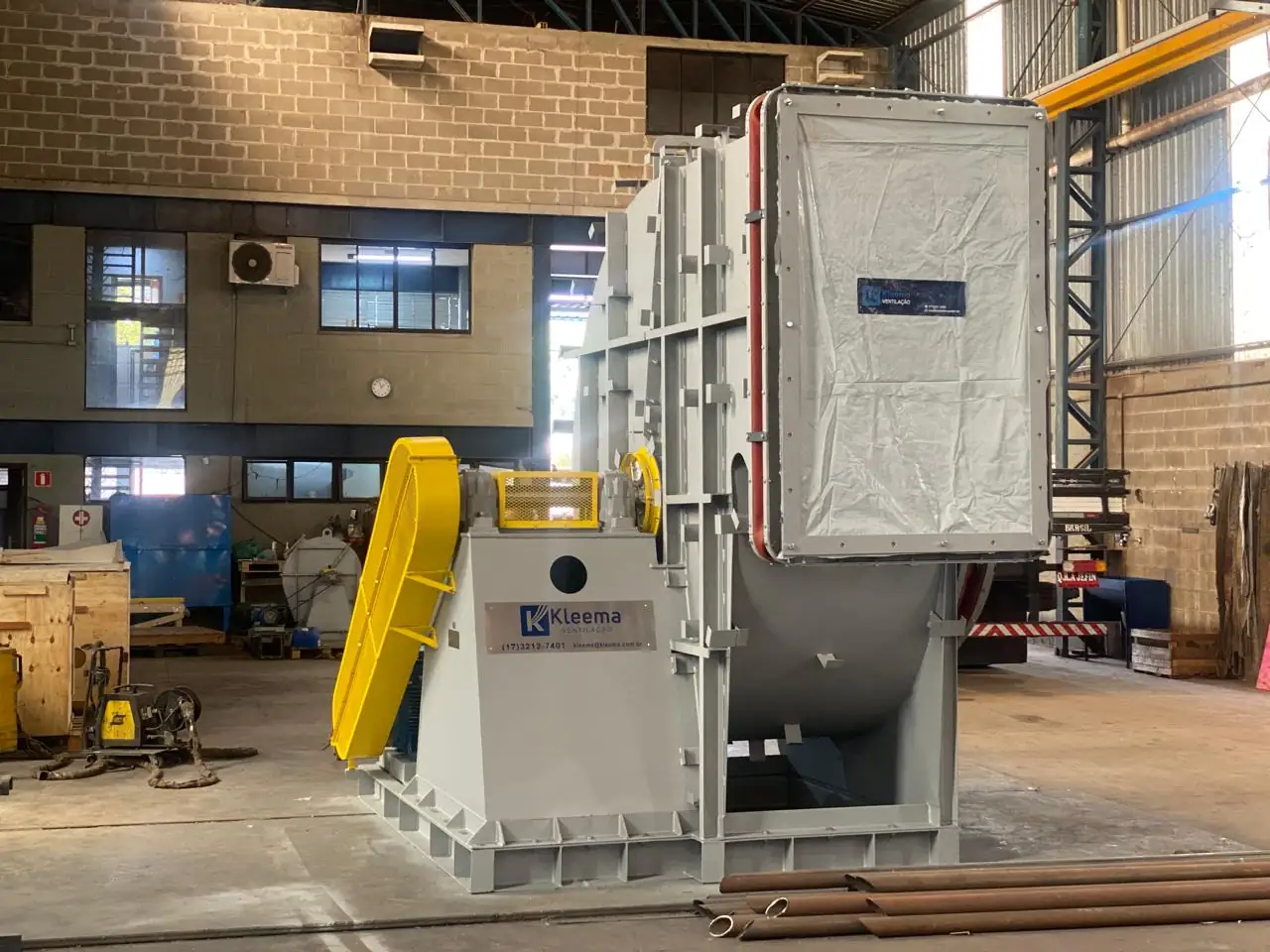
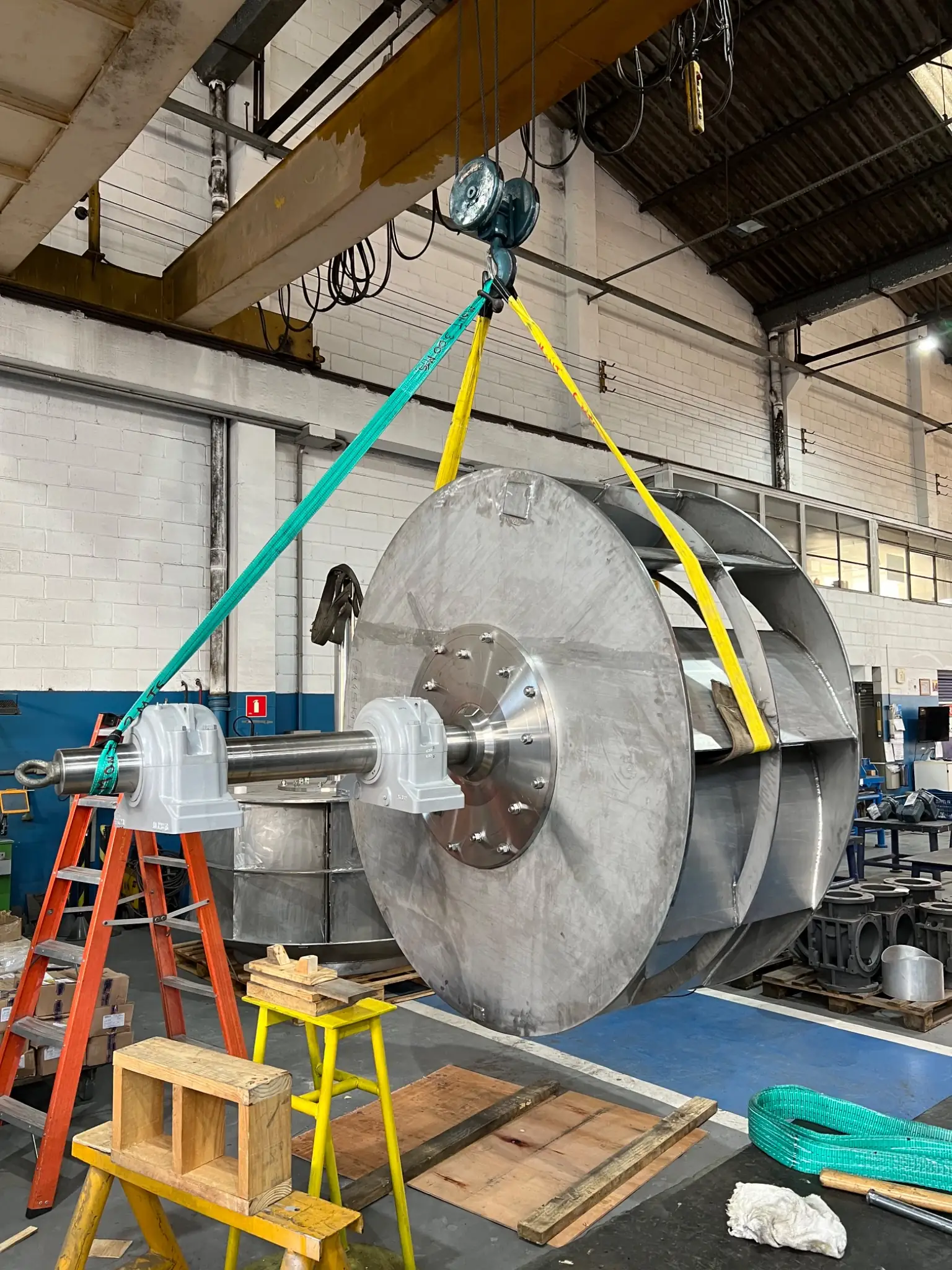
Fan performance depends on compatibility between aerodynamic design, mechanical construction, and system conditions. These decisions are assessed together when specifying equipment.
Manufacturing combines controlled welding, dimensional inspections, and dynamic balancing of the rotating assembly. Depending on application, selection may include abrasion-resistant steels, stainless steels, and special coatings in areas of greatest wear.
Blade geometry is defined by the operating point, gas characteristics, and particulate content. Explore Kleema impeller configurations.
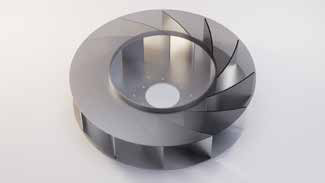
Moderate efficiency
Used where particulate passes through the impeller or where low flow rate and high pressure are combined.
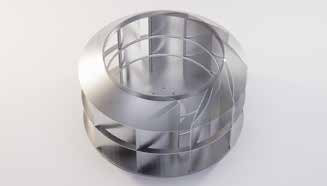
High efficiency
Combine high efficiency with a broad flow and pressure range. Serve a variety of industrial processes, balancing performance and initial investment.
Very high efficiency
Blades with an aerodynamic profile similar to a wing, developed to improve air handling efficiency. Used especially in large equipment and processes with demanding energy efficiency requirements.
Extraction from filters and process equipment, industrial gas handling, combustion air supply, and pneumatic conveying applications. Selection considers gas characteristics, particulate content, and each installation's conditions.
Specification starts with the required operating point and actual system conditions. These are the main design assessment parameters.
| Flow rate and pressure | Flow rate at actual gas conditions, required total or static pressure, and system losses. |
|---|---|
| Gas conditions | Temperature, composition, moisture, density, and installation altitude. |
| Particulate material | Dust content, concentration, abrasiveness, and wear conditions. |
| Impeller and materials | Geometry and materials defined by required performance and process characteristics. |
| Speed and power | Operating speed, absorbed power, and motor power assessed for operating duty. |
| Construction arrangement | Mechanical and drive configuration compatible with the installation and maintenance requirements. |
| Control and integration | Flow adjustment and process integration features according to scope. |
| Noise and vibration | Operating requirements, support conditions, and monitoring criteria defined for the application. |
Tell our team which process needs ventilation and its operating conditions.