Agribusiness and fertilizers
Fans in grain processing: corrosion and abrasion
In soybean, corn and other grain processing, fines and moisture can encourage deposits and wear. Solids concentration and cleaning conditions influence fan stability throughout the campaign.
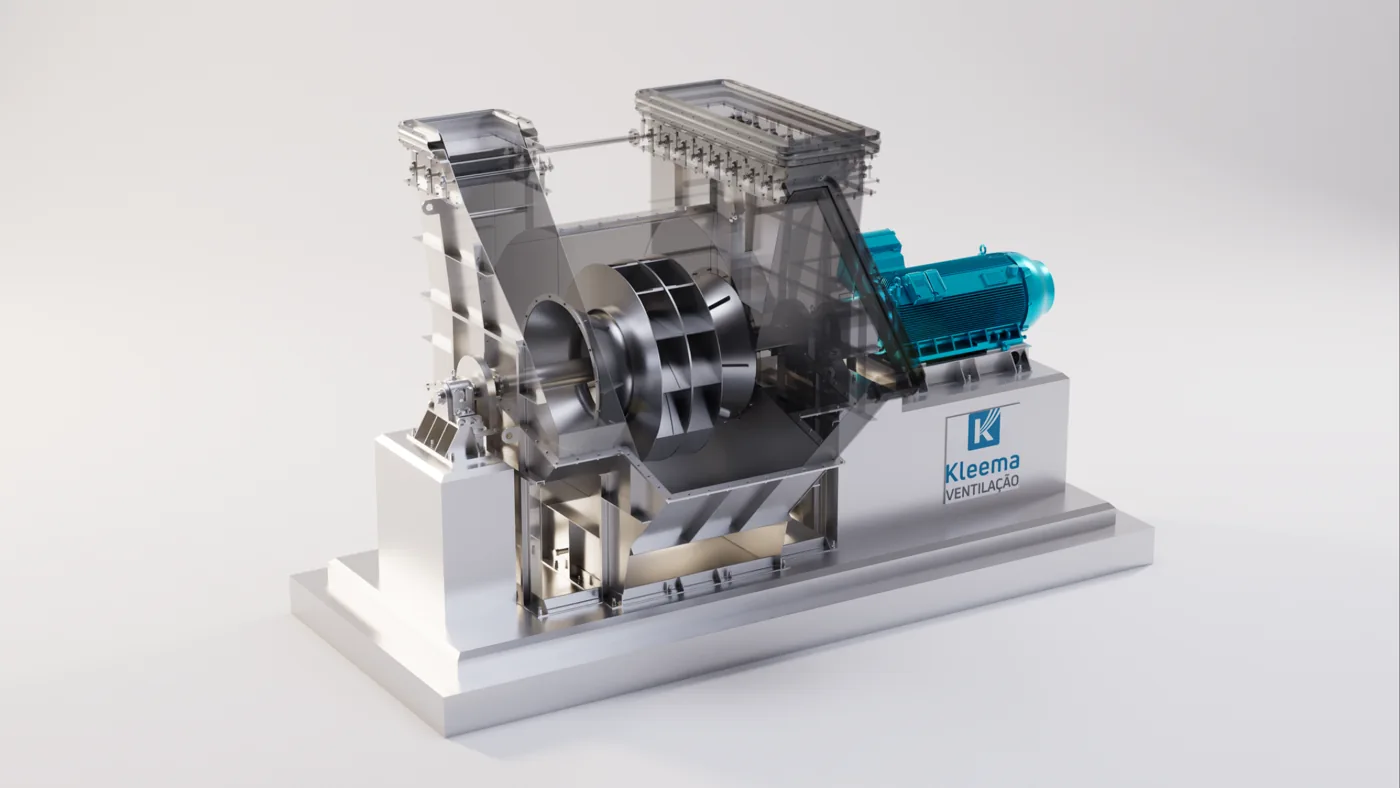
The process and emission sources
In grain processing, the stream may contain husks, meal, fines and moisture in varying proportions. Effects on the fan depend on its position relative to separators and filters. An aspiration line should not be specified using the same assumptions as a circuit that receives material directly.
Deposits alter mass and its distribution over the impeller, while abrasion removes material. Both phenomena can occur together and present similar symptoms. An increase in vibration requires an inspection that identifies the mechanism, without automatically assuming wear or a balancing fault.
Characteristics that guide engineering
Wear coatings must be compatible with impeller geometry and its balance condition. Materials selection must also consider potential product contact and the line's hygiene requirements.
Solution configuration and sizing
Impeller geometry must be compatible with the presence of solids and ease of cleaning. Wear materials and coatings can protect specific regions, but their application must preserve aerodynamic shape, attachment and mechanical integrity. Compatibility with the product and hygienic cleaning procedures must also be considered.
For moisture and corrosive agents, selection must assess the chemical condition of the stream and surfaces susceptible to condensation. Seals and bearings need protection consistent with the environment, while inspection doors must allow access without impairing tightness or making reassembly difficult.
Design parameters
| Parameter | How to assess it | Engineering decision |
|---|---|---|
| Deposit and wear | Inspect before correcting | Distinguish added mass from material loss |
| Presence of solids | Confirm the stream reaching the impeller | Select geometry and protection |
| Airflow in the application | Relate to circuit resistance | Verify the service actually delivered |
- Characterize the dust.
- Avoid persistent deposits.
- Provide access to regions subject to wear.
- Monitor vibration and bearing condition. Speed adjustments must respect the mechanical limits of the assembly.
Performance, diagnostics and maintenance
Maintenance must record deposits, thickness in critical regions and vibration trends under equivalent conditions. Cleaning the impeller can restore balance by removing buildup, but does not restore lost material. Repair by adding a coating requires verification of geometry, strength and balancing.
Performance must also be assessed by the airflow reaching aspiration points. An apparently stable fan may be operating below demand because of network obstruction or increased filter resistance. This information enables a choice between maintenance, adaptation or replacement.
Cleaning and balancing
The maintenance plan must address the cause of deposits and define conditions for cleaning and inspection. Work on the impeller must not change its geometry or mass distribution without appropriate integrity and balancing checks.
Further technical reading
Does your process need an assessment?
Talk to Kleema engineering about sizing, modernization and operating conditions.
Talk to engineering ↗