
Mining
Combustible dusts in mining: criteria for reducing risks
Not all mineral dust is combustible, but materials such as coal and certain processed dusts may require specific protection. Classification must result from characterization of the material and installation conditions.
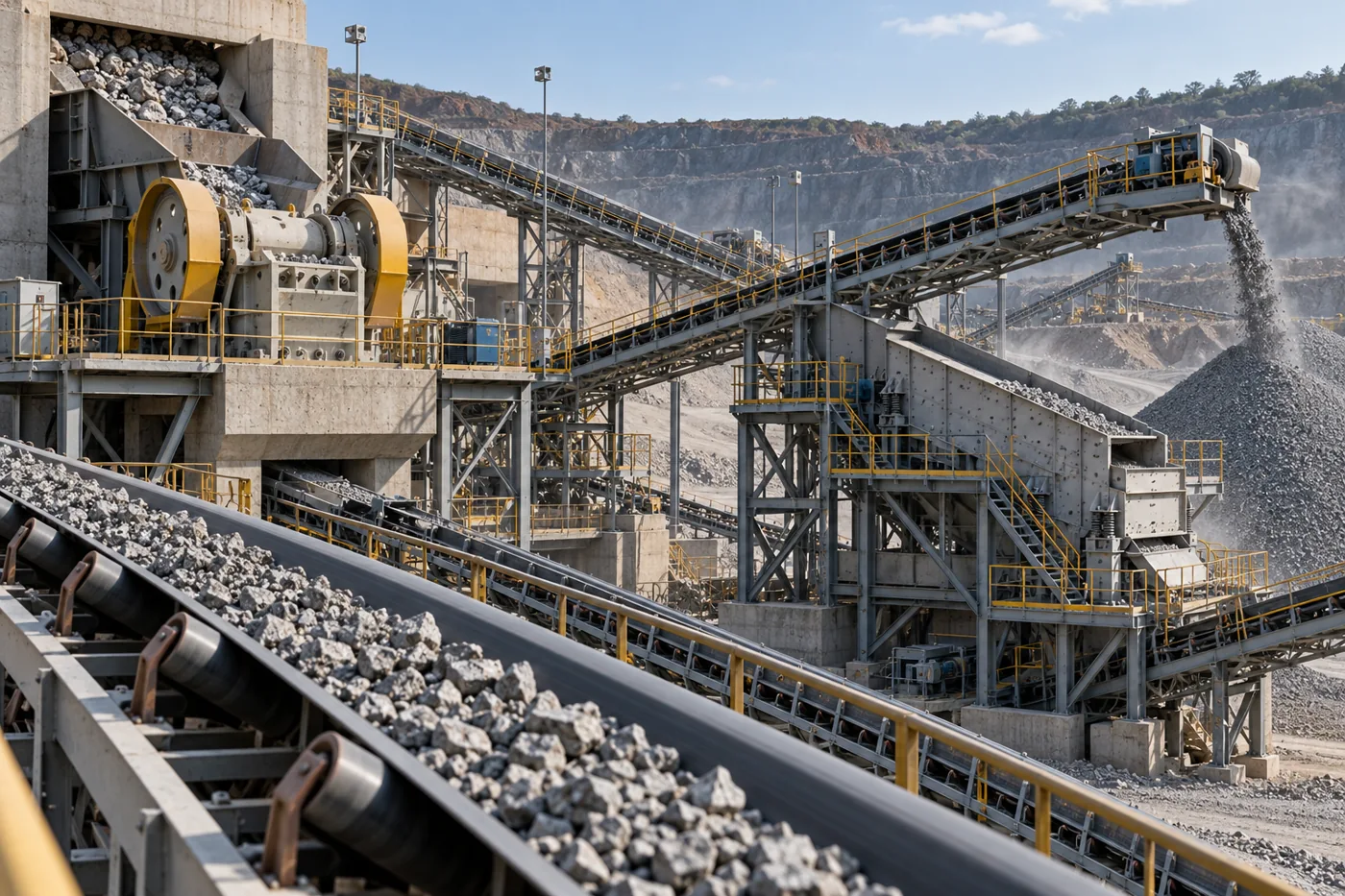
The process and emission sources
Mining installations may contain both noncombustible materials and others with fire or explosion potential, such as certain coals and processed dusts. Assessment must consider a representative process sample, its particle size distribution and moisture. A generic ore name proves neither the absence nor the presence of risk.
Collection concentrates fines and connects equipment through ducts and discharges. Changes in drying or composition can alter the risk condition. The survey must therefore include raw-material suppliers, beneficiation stages and abnormal events as well as nominal operation.
Characteristics that guide engineering
Prevention of ignition sources, housekeeping and deposit control form part of the strategy. Where needed, isolation, venting or suppression must be selected as compatible systems, also considering propagation through ducts.
Solution configuration and sizing
The strategy must identify ignition sources and accumulation conditions and define the necessary prevention and protection measures. Characterization may include explosibility and ignition parameters, as required by the analysis. These data should not be replaced by a generic specification for a reinforced filter.
Where needed, venting, isolation and suppression must be selected for the equipment and its connections. A cyclone does not remove all risk by separating coarse particles, and a spark arrestor does not control every ignition source. The installation must also allow device inspection and maintenance and prevent modifications that invalidate their design conditions.
Design parameters
| Parameter | How to assess it | Engineering decision |
|---|---|---|
| Representative material | Assess properties and changes | Define the actual risk |
| Connected paths | Map possible propagation | Select integrated protection |
| System upkeep | Inspect and control modifications | Maintain design conditions |
- Identify dust properties.
- Check hot sources and static electricity.
- Define inspections.
- Assess discharge and connections between equipment. An isolated component does not demonstrate protection of the complete system.
Performance, diagnostics and maintenance
Verification must check documentation, application and component condition, as well as capture efficiency. Deposits outside equipment, material changes and out-of-service devices are relevant information for installation management. Absence of incidents does not demonstrate design suitability.
The plan must provide for review when raw material, capacity or routing changes. This article provides conceptual guidance: device and requirement definition depends on the specific risk assessment and the demonstrated characteristics of the material and system.
Changes in raw material
Risk assessment must be reviewed when the product, particle size distribution or process changes. Classifying risk solely by the ore's commercial name may conceal relevant differences between materials processed in the same installation.
Further technical reading
Does your process need an assessment?
Talk to Kleema engineering about sizing, modernization and operating conditions.
Talk to engineering ↗