Mining
Dust extraction from silos and transfer points in mining
Filling silos and dropping material at transfer points displace air and can disperse dust. Emission geometry and the loading regime define the capture solution.
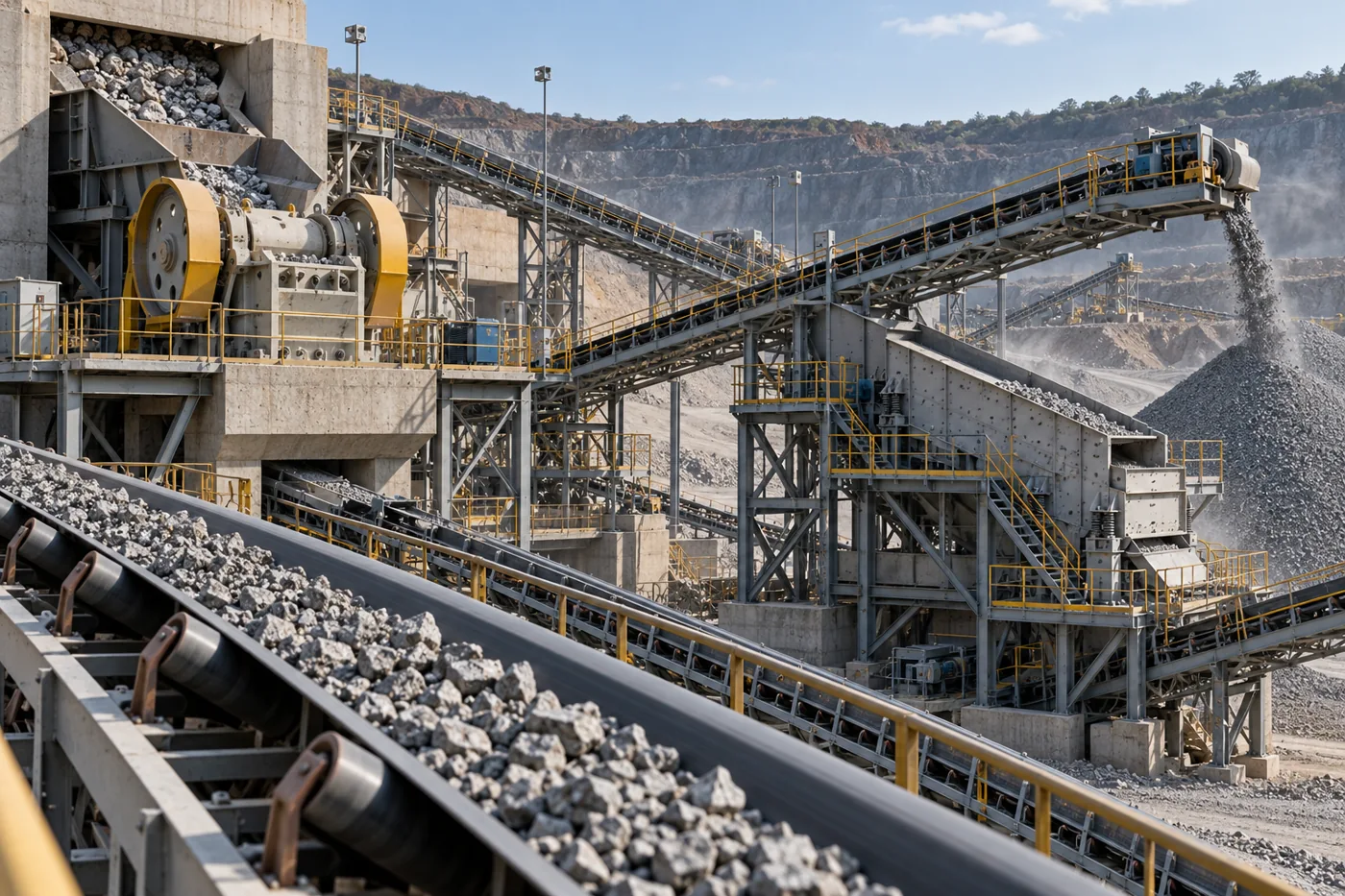
The process and emission sources
Filling a silo displaces internal air, which may carry fines toward openings. In chutes and transfers, falling material also entrains air and releases a plume. Average production throughput does not necessarily describe the emission peak during rapid loading or a change in operating regime.
The point's geometry defines the possibility of containing and capturing dust. Poorly sealed enclosures increase the influence of wind and the quantity of air that must be moved. The design must allow inspection and operation without requiring doors to remain open.
Characteristics that guide engineering
Centralized systems and local filters have different implications for maintenance, ducts and dust return. The choice must consider distances, simultaneous operation and the possibility of discharging collected material back into the process itself.
Solution configuration and sizing
Local filters can reduce duct lengths and allow dust to return to the process itself, where appropriate. A centralized system may facilitate certain maintenance routines, but requires balancing and solids transport through the network. The comparison must consider distances, simultaneous operation and the possibility of material segregation.
At the silo, air removal must be coordinated with the vessel design and its dedicated protective devices. The filter does not replace the functions needed to control overpressure or negative pressure. Hoppers and discharges must also prevent collected material from accumulating or recreating emissions at another point.
Design parameters
| Parameter | How to assess it | Engineering decision |
|---|---|---|
| Loading peak | Observe the complete event | Define capture demand |
| Local or central arrangement | Compare routing and simultaneous operation | Choose the architecture |
| Silo conditions | Check pressure interfaces | Integrate collection and vessel protection |
- Identify filling peaks.
- Reduce unnecessary openings and drops.
- Avoid excessive product entrainment.
- Check branch balancing and discharge conditions. Capture does not replace the sizing of silo ventilation and protection.
Performance, diagnostics and maintenance
Acceptance must follow the filling or transfer event with product present. It is important to observe the beginning, peak and end of the operation, since emissions may be concentrated at one of these stages. Measuring with the source stopped can check the circuit, but does not represent the entire operating situation.
Differential pressure trends, cleaning frequency and dust-return conditions help identify loss of capacity. If leakage is concentrated at a particular opening, there may be a containment or hood-positioning issue that cannot be resolved simply by enlarging the collector.
Filling conditions
Intermittent loading can generate peaks different from average production throughput. The collector must be sized for relevant events and allow inspection of dust return without impairing silo or transfer-point use.
Further technical reading
Does your process need an assessment?
Talk to Kleema engineering about sizing, modernization and operating conditions.
Talk to engineering ↗