Mining
Dust extraction at screens, crushers and belt conveyors
Crushing, screening and belt transfers generate dust at distributed sources. Overall efficiency depends on capturing material at its origin, transporting it through ducts and collecting it without accumulation or excessive wear.
The process and emission sources
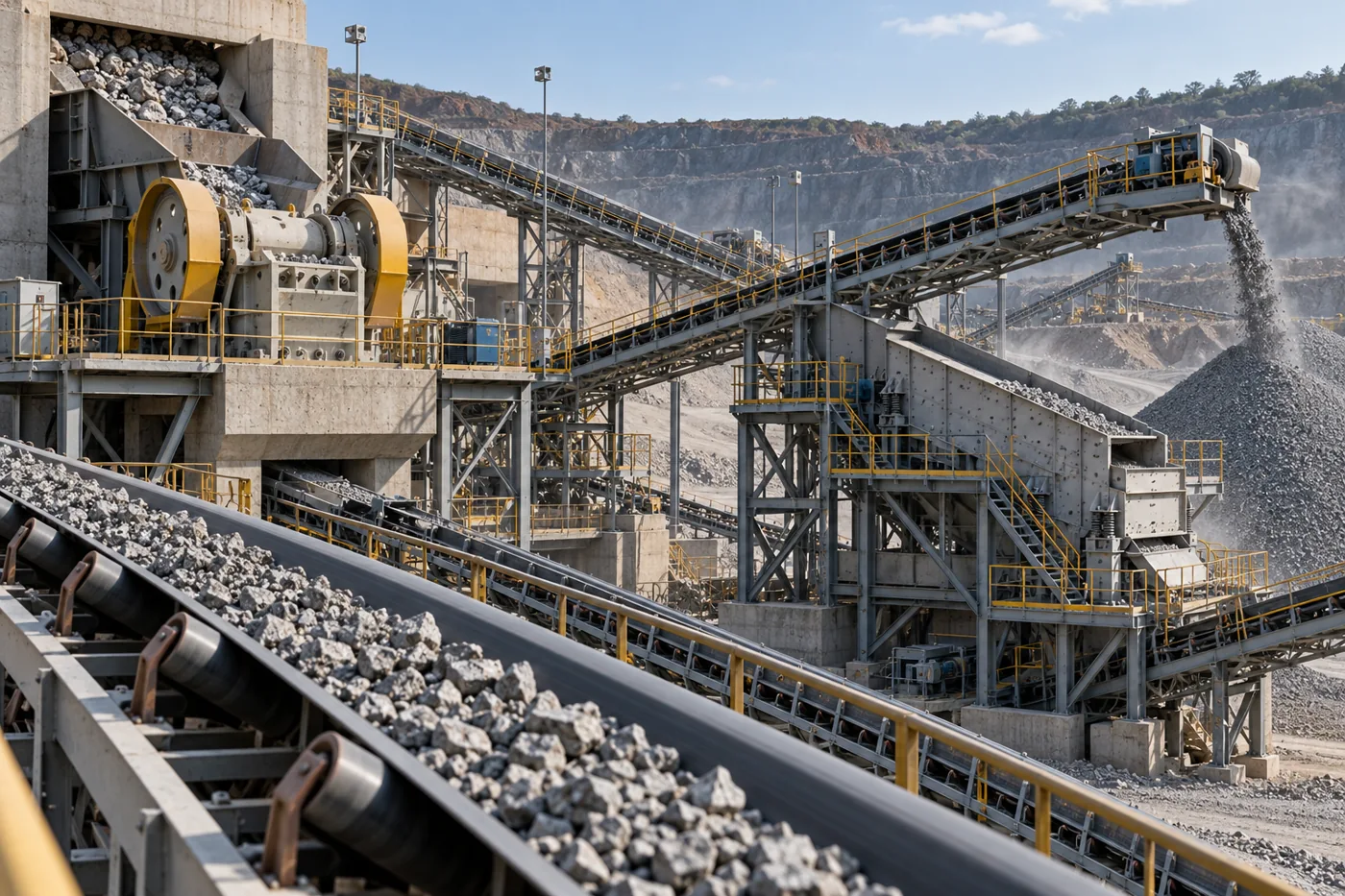
Crushers break ore, screens agitate and classify it, and belts carry it between stages. At each operation, movement releases some of the fines already present or generated. Dust volume depends on moisture, size distribution, friability and line capacity.
An open source exposed to wind requires a different approach from an enclosed chute. Before choosing the collector, it is necessary to understand how dust escapes and how much of the extracted air actually contributes to capture. This assessment avoids using excessive airflow to compensate for insufficient containment.
Characteristics that guide engineering
Increasing airflow without reviewing enclosures can raise consumption and entrain useful product. Hood geometry, distribution among branches and transport velocity must be assessed in relation to dust particle size distribution and density.
Solution configuration and sizing
The arrangement may combine enclosures, extraction take-offs and a centralized collector or local units. The choice depends on distances, maintenance and material compatibility. Ducts must convey fines without persistent deposition, but unnecessarily high velocities increase losses and wear.
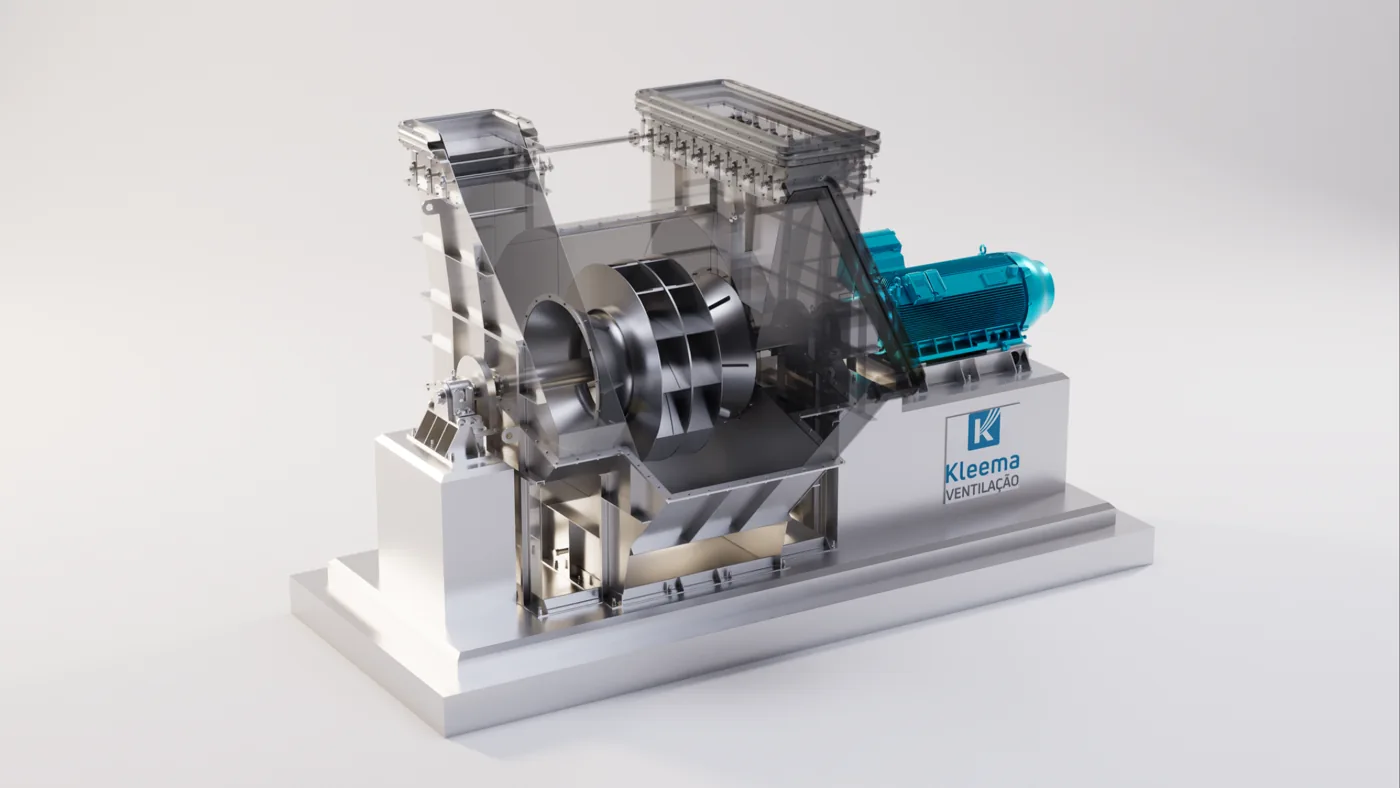
At the filter, the inlet must distribute flow and reduce direct impact on the bags. Dust loading, the behavior of the cake formed and cleaning guide the filtration area. Double-flap valves may be considered for discharging highly abrasive materials or where rotary valves risk jamming, provided they are compatible with the pressure and solids flow.
Design parameters
| Parameter | How to assess it | Engineering decision |
|---|---|---|
| Ore and moisture | Characterize by campaign | Estimate dust generation and behavior |
| Airflow per source | Measure with equipment operating simultaneously | Verify capture throughout the network |
| Abrasion and discharge | Inspect bends and hoppers | Preserve transport and availability |
- Identify equipment that operates simultaneously.
- Assess moisture and abrasiveness.
- Protect bends and inlets.
- Check hopper discharge and maintenance access.
Performance, diagnostics and maintenance
Results must be observed at each source, especially when line capacity or ore changes. Adequate collection at a screen does not demonstrate that the crusher received the necessary airflow. A shared network must be measured under representative simultaneous operating conditions.
Abrasion at bends, declining airflow and increased cleaning time are signs that call for investigation. Diagnosis must relate the condition of ducts, filter and fan. Replacing bags without correcting a poorly distributed inlet or a blocked hopper tends to repeat the failure without restoring the expected availability.
Illustrative example: simultaneous operation and airflow distribution
Imagine three sources whose capture assessment has hypothetically specified 6,000 m³/h for a transfer point, 9,000 m³/h for a crusher and 12,000 m³/h for a screen. If all can operate simultaneously, total demand is 27,000 m³/h, before design adjustments related to the network and measured conditions.
If an effective interlock allows only the crusher and screen to operate under a given condition, that combination requires 21,000 m³/h under the assumptions of this example. Adopting an average commercial simultaneity factor is not sufficient: the design must represent the combinations that can actually occur and ensure airflow in each branch.
These figures are illustrative and are not airflow references for each equipment type. The value for each source depends on geometry, enclosure and dust generation. Even if total fan airflow is correct, the network may distribute air inadequately and leave a source without sufficient capture.
Network balancing
When several points share a collector, a change in one branch may alter airflow distribution in the others. Verification must consider the actual combinations of equipment running and record the conditions used as a reference.
Further technical reading
Does your process need an assessment?
Talk to Kleema engineering about sizing, modernization and operating conditions.
Talk to engineering ↗