Agribusiness and fertilizers
Filtration in sugar and ethanol mills: dust, moisture and fibers
Emission control in sugar and ethanol mills involves distinct sources, such as biomass handling and thermal processes. The presence of fibers, moisture and load variations requires characterization by circuit.
The process and emission sources
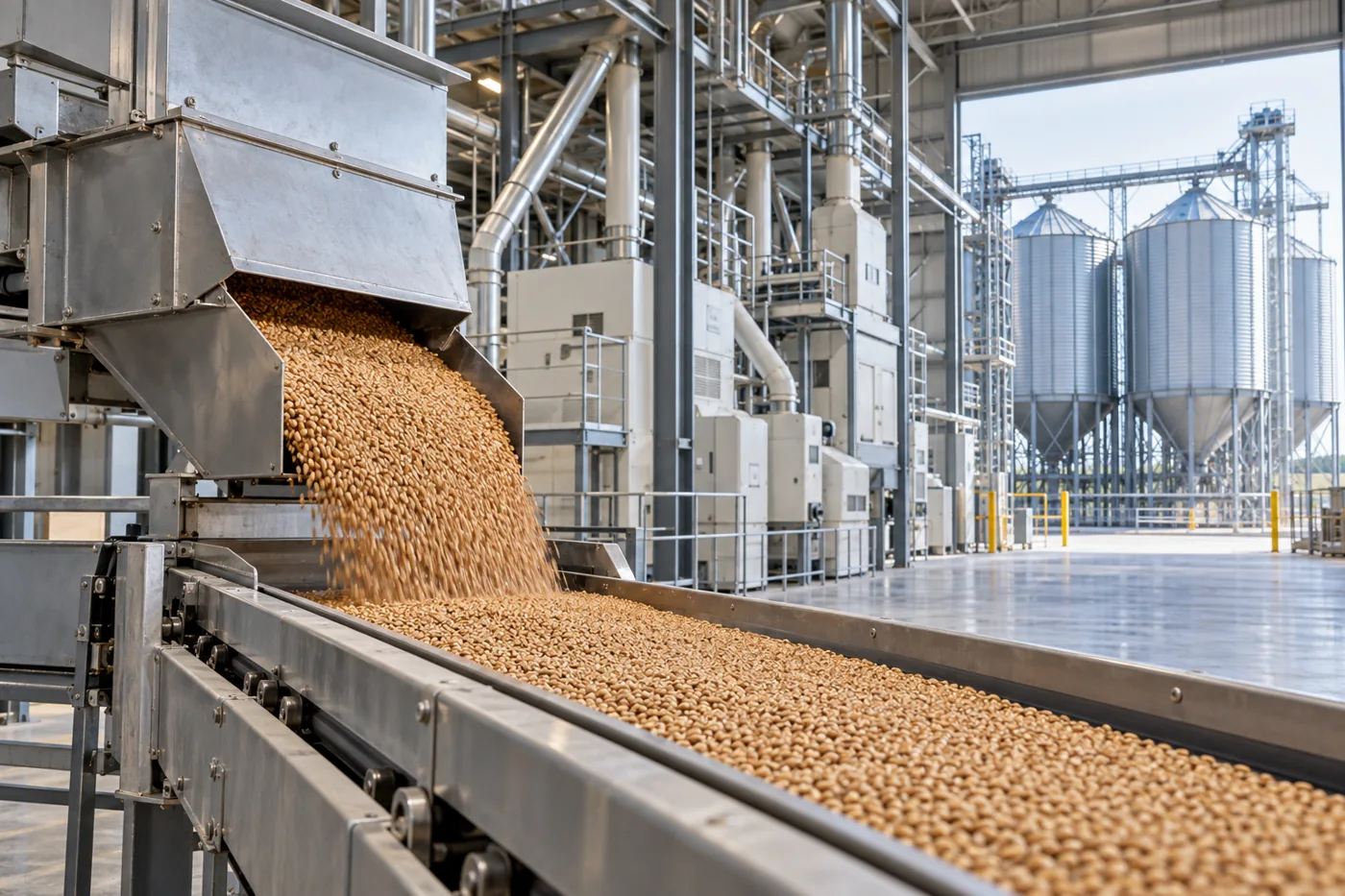
A sugar and ethanol mill combines sources such as bagasse handling, sugar conveying and gases from thermal equipment. These circuits involve different materials and objectives: preserving product, reducing localized dust or controlling combustion emissions. The solution must be selected for each stream.
Fibers can form deposits and impede discharge; sugar dust has quality and combustibility requirements; combustion particles arrive with their own temperature and composition. The presence of water or steam can encourage adhesion and condensation in dry systems.
Characteristics that guide engineering
Sugar dust, bagasse and combustion particles behave differently. Dry systems need conditions compatible with the filter medium; wet or adhesive streams may require a different separation and conditioning arrangement.
Solution configuration and sizing
The design must define where local capture, separation of coarse fractions and filtration are appropriate. For streams compatible with a bag filter, temperature and dew point must be assessed alongside the operating regime. Insulation, false air ingress and the startup sequence influence internal surface conditions.
Fibers and low-density materials require attention to flow distribution and discharges, which cannot be selected solely by average volume. For materials intended for food use, return and contact with surfaces must meet the facility's quality criteria. If combustible dust is present, the protection assessment must correspond to the material and circuit connections.
Design parameters
| Parameter | How to assess it | Engineering decision |
|---|---|---|
| Stream origin | Separate biomass, sugar and combustion | Define the treatment function |
| Moisture and fibers | Observe adhesion and flow | Select filter and discharge |
| Harvest-season regime | Compare load and fuel | Interpret seasonal performance |
- Assess the source and composition.
- Check for condensation.
- Size fiber transport and discharge.
- Consider combustibility where applicable. The design must accommodate harvest-season and off-season operating regimes.
Performance, diagnostics and maintenance
Monitoring must distinguish the harvest season, fuel changes and periods of lower load. High filter resistance may result from moisture or adhesion, while poor capture may relate to the network and process openings. Adjustments must address the identified cause.
Availability must be assessed using the history of interventions, accumulations and element replacements. Recovering a material does not automatically mean it can be reused in the final product. Expected performance combines emission control, continuity and appropriate solids handling, with application-specific verification.
Operation throughout the harvest season
Installation availability also depends on planning inspections, cleaning and element replacement. Monitoring must distinguish failures associated with fuel, moisture or product handling to direct corrective action.
Further technical reading
Does your process need an assessment?
Talk to Kleema engineering about sizing, modernization and operating conditions.
Talk to engineering ↗