Cement
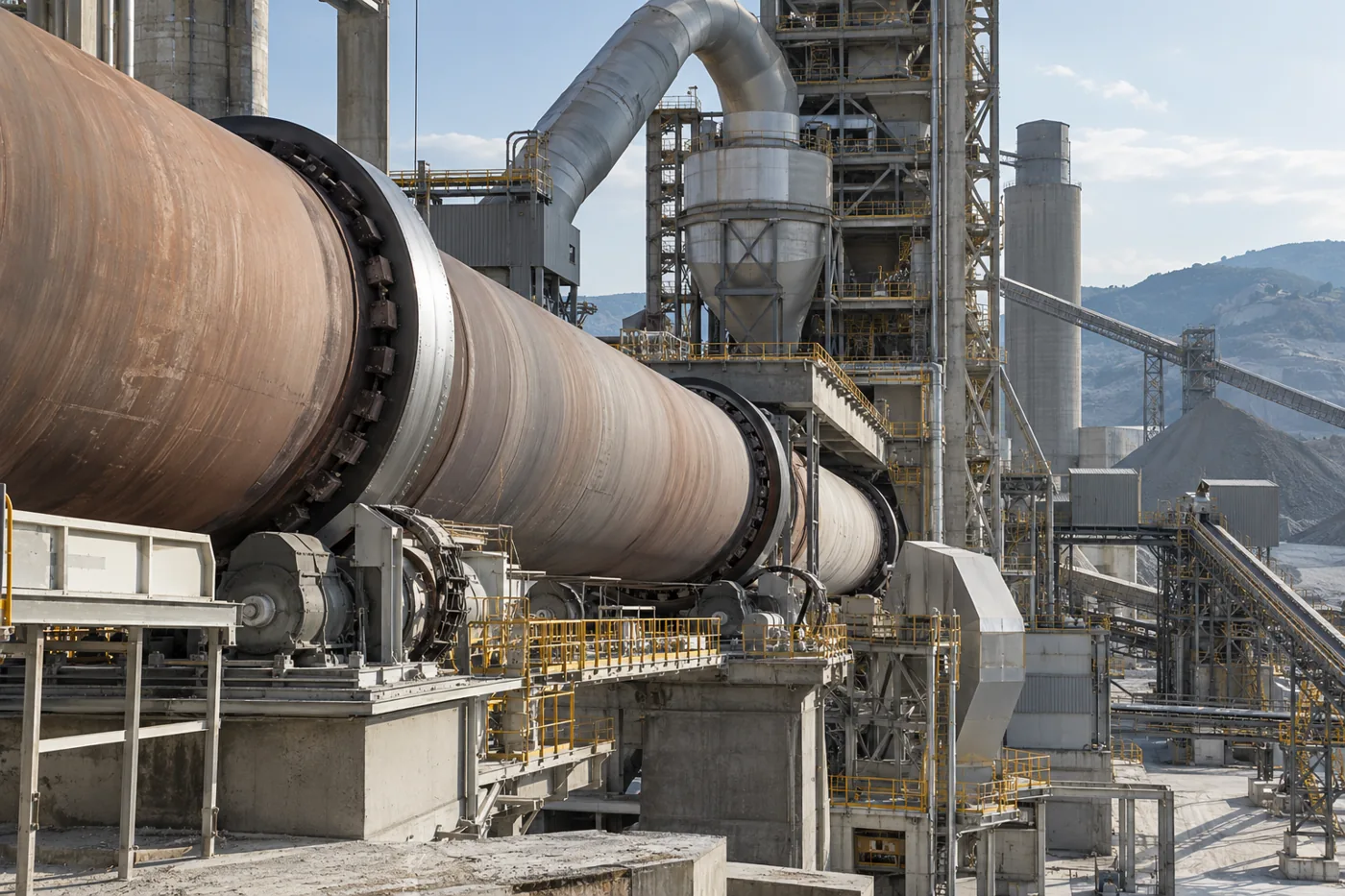
Fans for kilns and clinker coolers
Ventilation in the clinker line involves temperature, high flow rates and varying resistance conditions. Selection must respect the fan function in the kiln or cooler and the specific circuit conditions.
The process and emission sources
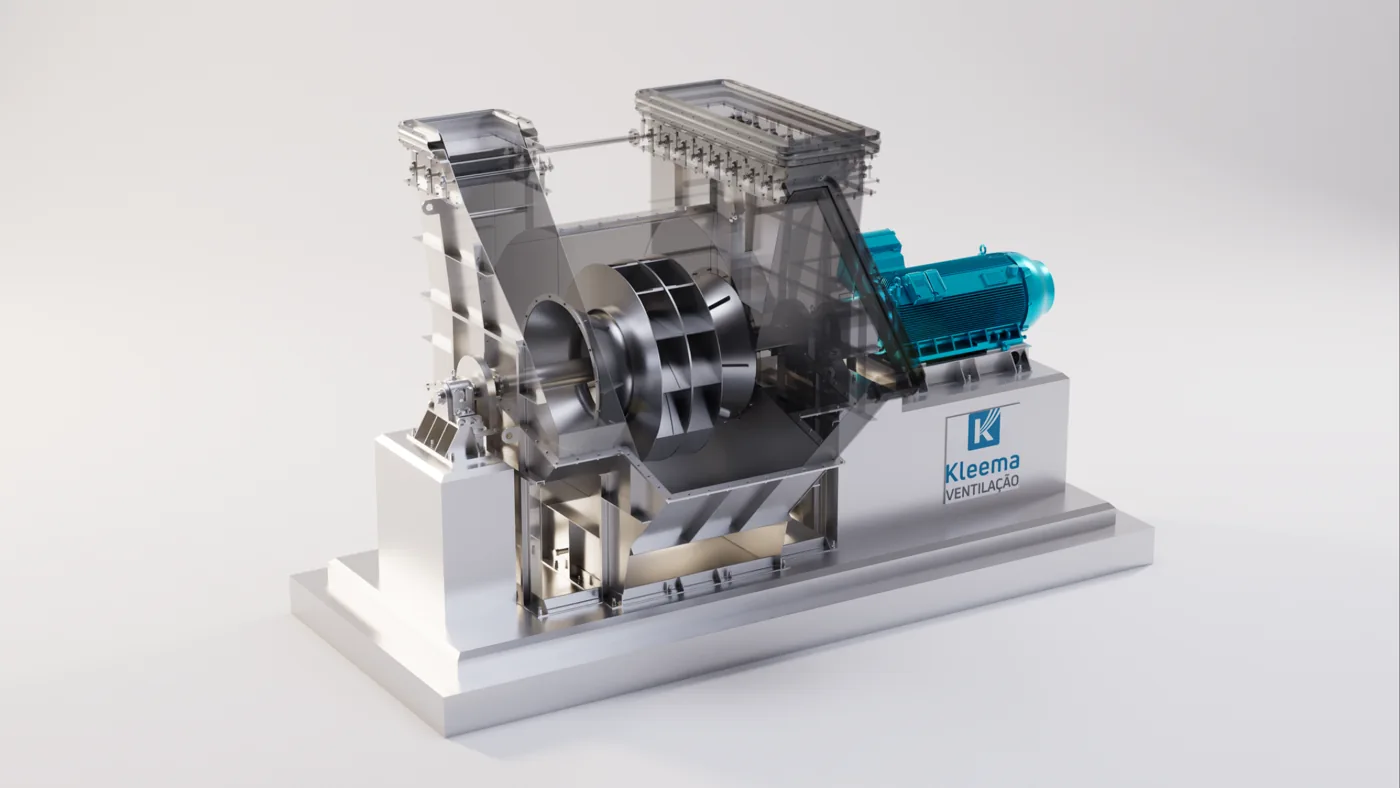
Fans in the clinker line serve functions that must not be confused, such as moving process gases or supporting air streams in the cooler. Temperature, density, resistance and solids content can vary widely between positions. Selection must identify the exact duty and its corresponding range of conditions.
Cold startup may present a different power condition from operation with heated gas. Hot operation, in turn, adds expansion and material requirements. Sizing must assess both, without assuming that the most frequent nominal operating point is always the most demanding for every component.
Characteristics that guide engineering
Gas density, expansion and solids presence affect performance and construction. Wear protection must be compatible with the impeller, casing and maintenance conditions, preserving the mechanical integrity of the assembly.
Solution configuration and sizing
The fan curve must be matched to operating density and circuit resistance. The impeller, casing, shaft and transmission must meet mechanical and thermal limits. Wear protection must be located according to particle trajectory, preserving geometry and balance.
Installation interfaces play an important role. Duct expansion must not transfer improper loads to the fan; the base, alignment and connections must follow the design. Instrumentation and inspection access must allow monitoring of vibration, bearing temperature and wear without depending on lengthy interventions.
Design parameters
| Parameter | How to assess it | Engineering decision |
|---|---|---|
| Function and operating regimes | Identify duty and startup | Select the operating envelope |
| Density and power | Check cold and hot conditions | Check motor and curve |
| Expansion and installation | Assess interfaces and alignment | Preserve assembly integrity |
- Define normal and extreme operating points.
- Check power across the entire range.
- Provide inspection access and instrumentation.
- Assess base, coupling and alignment. Process changes require the operating point to be checked again.
Performance, diagnostics and maintenance
Assessment must relate flow rate, pressure, power and temperature to process modes. If a fan consumes more power after a filter modification, the cause may be a new resistance condition rather than an efficiency loss due to wear. Signals must be interpreted alongside the system curve.
Upgrading an existing assembly may include aerodynamic adaptation, wear materials and the drive. Its feasibility must be compared with replacement, considering capacity, integrity and installation. The aim is to meet current demand reliably, without attributing every process deficiency to motor size.
Adapting existing fans
A change in flow rate or circuit resistance may justify upgrading the installed assembly. Feasibility depends on aerodynamic and mechanical assessment, including the impeller, shaft, drive and interfaces with the existing base.
Further technical reading
Does your process need an assessment?
Talk to Kleema engineering about sizing, modernization and operating conditions.
Talk to engineering ↗