Cement
Clinker cooler dust extraction: thermal control and abrasion
Clinker cooler exhaust air may contain high loads of abrasive particles and undergo temperature variations. The design must consider normal operation and the transients reported by the operating team.
The process and emission sources
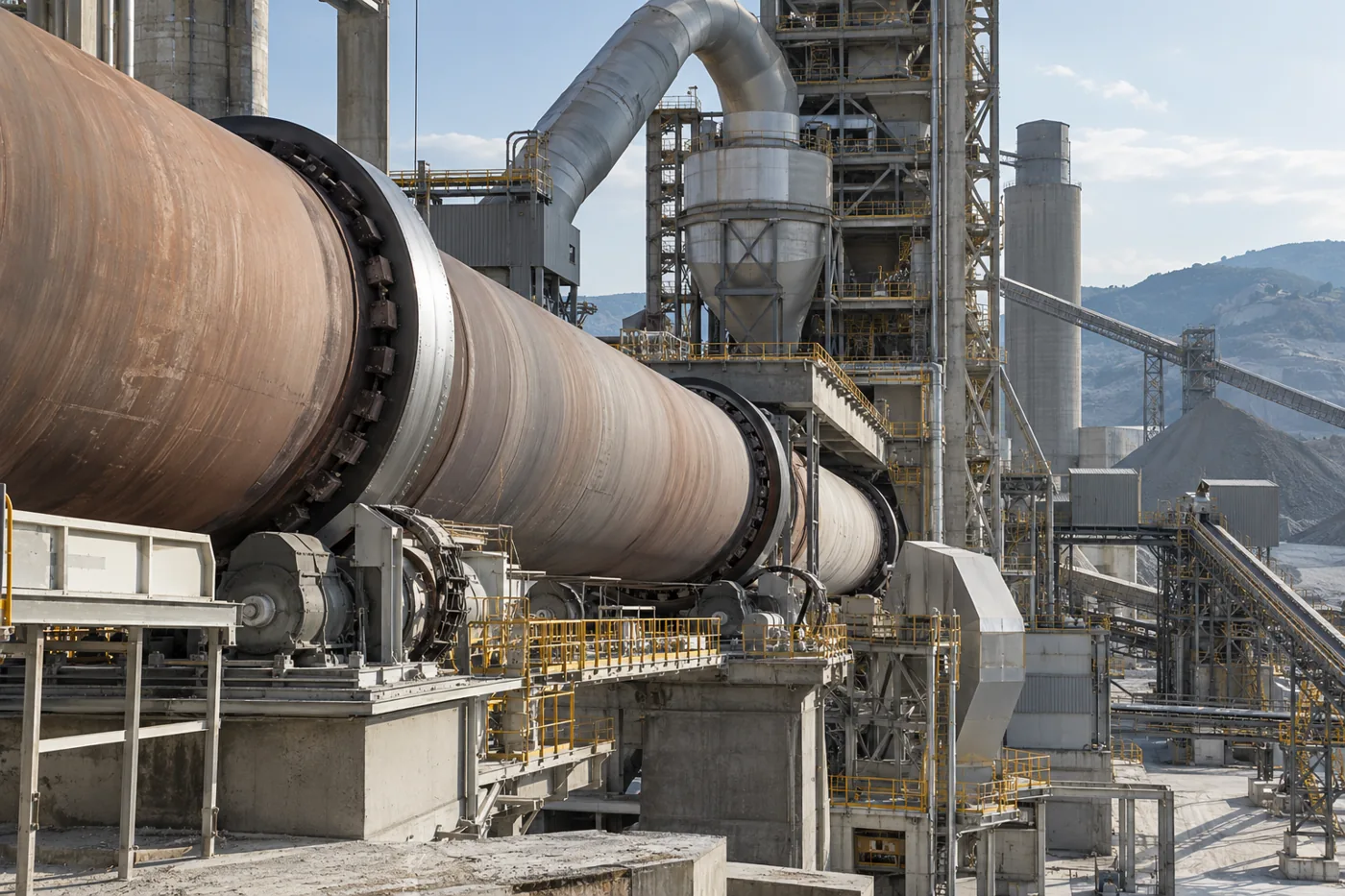
The cooler receives hot clinker and uses air to remove heat from the product. Some of the air contributes to process heat recovery; another portion may go to the dust extraction system. The exact stream to be treated must be identified, along with how its draft affects cooler operation.
Clinker particle size distribution, distribution across the grate and kiln events can change dust loading and temperature. A sudden change is more than an emissions peak: it can change airflow velocity, abrasion and the amount of material reaching the collector discharge.
Characteristics that guide engineering
Thermal peaks require the limits of the filter elements to be matched to gas conditioning. Dilution and cooling have different effects on airflow, energy and available space, and must be sized together with the filter.
Solution configuration and sizing
Engineering must establish a thermal envelope covering continuous and transient conditions. The filter medium must be compatible with this envelope and the gas composition, without relying on tolerance to unverified overtemperatures. Dilution or cooling must be sized alongside the volume increase or decrease they produce in the circuit.
At the filter inlet, distribution must prevent the particle-laden jet from striking the bags directly. Diffusers and wear protection can improve distribution, but must also allow inspection and avoid creating deposits. Hoppers, valves and conveyors must accommodate solids peaks to avoid turning the collector into unintended storage.
Design parameters
| Parameter | How to assess it | Engineering decision |
|---|---|---|
| Thermal envelope | Establish steady conditions and peaks | Select conditioning and filter medium |
| Gas distribution | Assess inlet and impact regions | Reduce localized wear |
| Solids flow | Relate collection and discharge | Prevent accumulation during process events |
- Review temperature and production history.
- Protect impact regions.
- Provide cleaning and discharge compatible with dust loading.
- Integrate alarms and interlocks into the plant operating philosophy.
Performance, diagnostics and maintenance
Performance must be monitored through temperature, airflow, differential pressure and discharge behavior during relevant operating regimes. Frequent temperature peaks may call for a review of conditioning or operating logic, rather than simply adopting a different fiber.
Interpreting bag failures helps distinguish localized abrasion, thermal damage and mechanical contact. The aim is to maintain the necessary draft and collection within specified targets, while ensuring availability for the line. Any savings assessment must include the fan, compressed air and thermal conditioning requirements.
Response to process variations
Operating limits must be known to the team and incorporated into the control logic. Alarm selection and protective actions depend on response times and equipment capacity, avoiding reliance solely on manual reaction to a thermal peak.
Further technical reading
Does your process need an assessment?
Talk to Kleema engineering about sizing, modernization and operating conditions.
Talk to engineering ↗