Mining
Fans in extraction and crushing: selection for abrasive dust
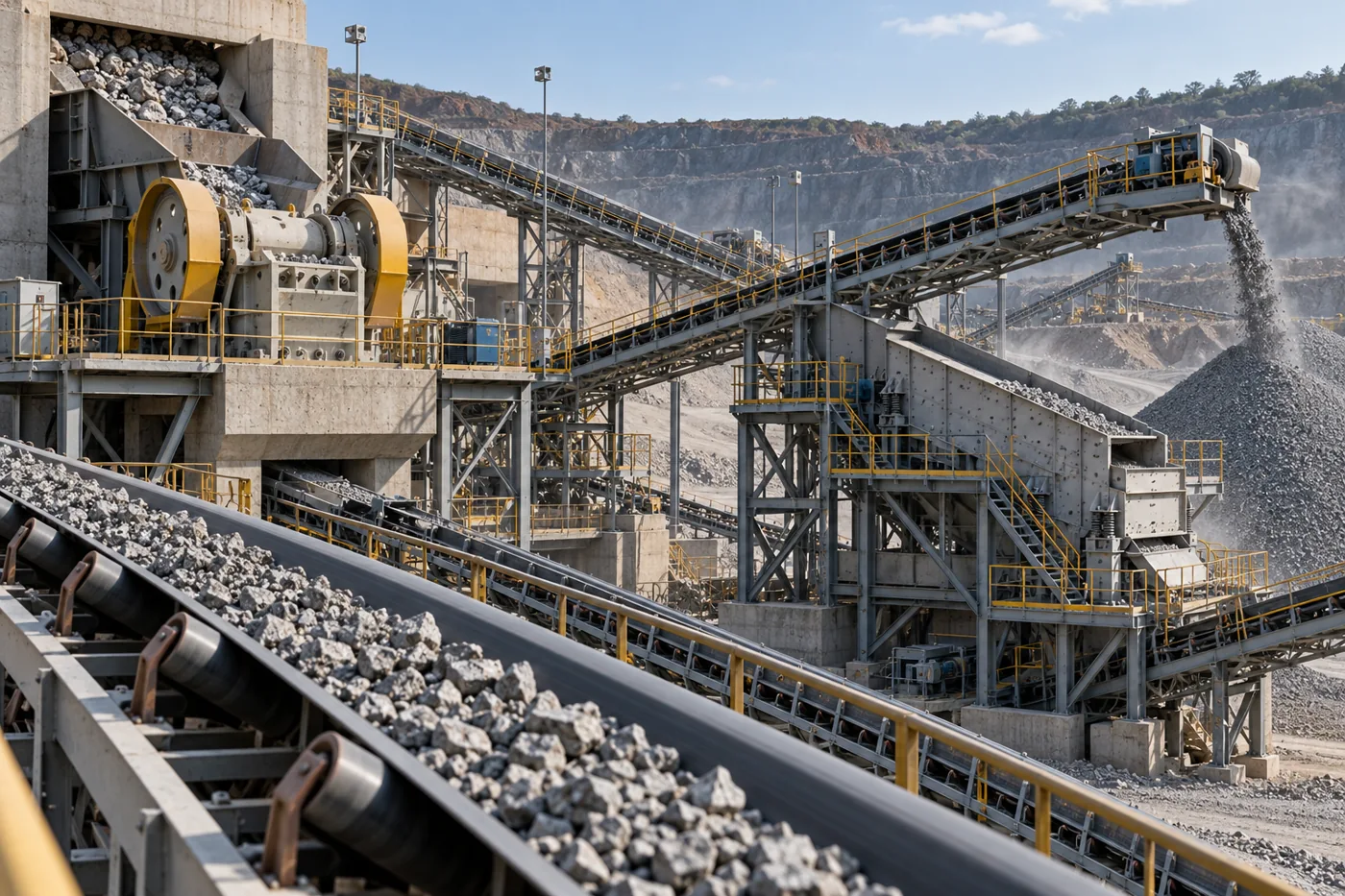
The fan in an extraction and crushing installation must overcome circuit resistance and sustain capture at operating sources. Its position relative to the collector influences the amount of solids that can reach the impeller.
The process and emission sources
In extraction and crushing, ventilation supports capture at distributed sources and must accommodate network resistance. The material may be highly abrasive, but how much reaches the fan depends on collector position and retention condition. The specification must make this boundary clear.
Duct length, bends, dampers and plant growth can move the system away from its original conditions. Finding inadequate aspiration at a source does not, by itself, demonstrate that the fan is undersized: deposition, leakage or an imbalance between branches may be present.
Characteristics that guide engineering
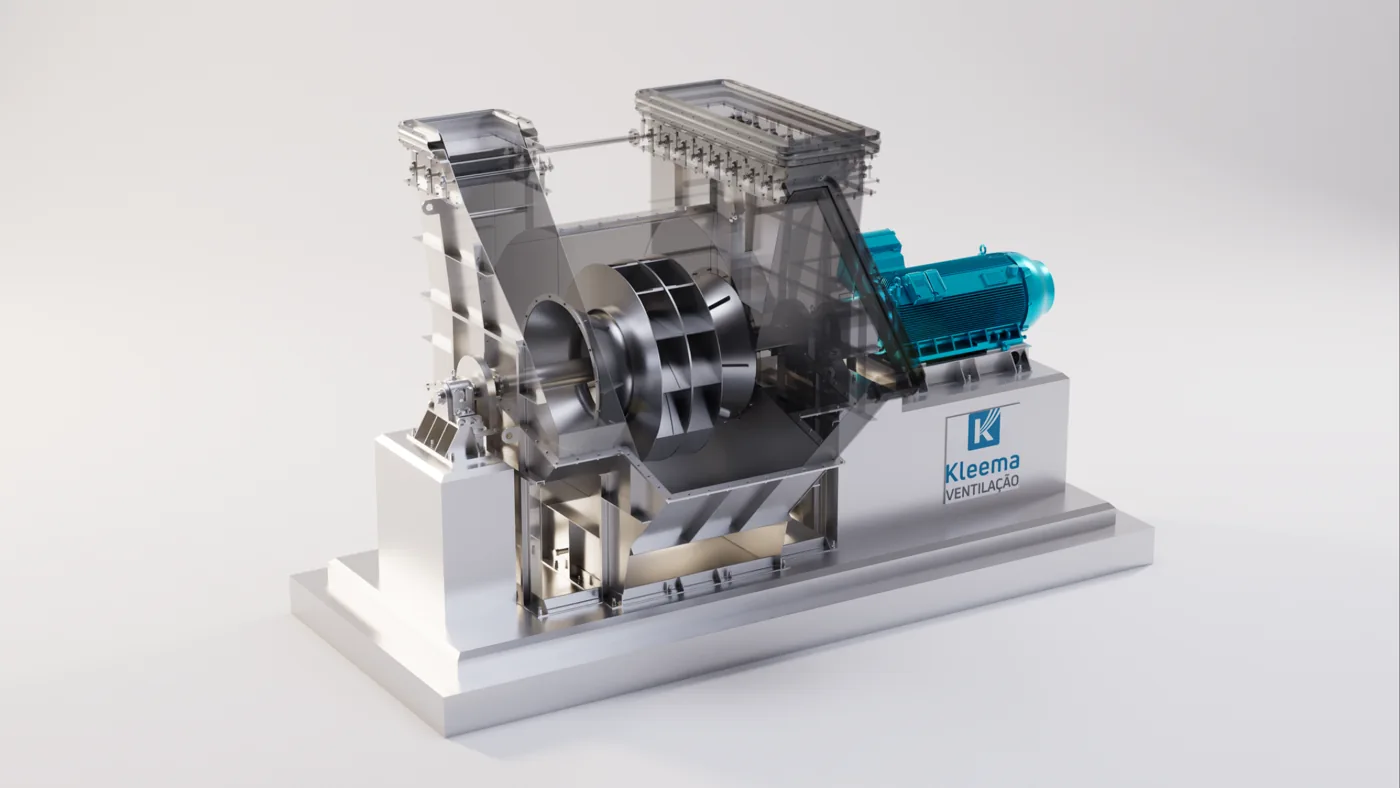
Geometry, materials and seals must be selected for the stream actually transported. A fan downstream of the filter must also be assessed for abnormal dust breakthrough conditions and system maintenance.
Solution configuration and sizing
Sizing must combine useful airflow at each source, route resistance and the filter's operating range. The impeller must be selected for the actual stream and expected maintenance conditions. Wear protection must preserve geometry, performance and repairability.
Installation must check the base, alignment, flexible connections where specified, and inlet and outlet arrangement. Abrupt transitions or nearby bends can reduce available performance. If the fan operates downstream of the filter, the design must distinguish normal operation from abnormal dust breakthrough rather than treating them as equivalent exposures.
Design parameters
| Parameter | How to assess it | Engineering decision |
|---|---|---|
| Sources and routes | Map the operating network | Define flow rate and pressure |
| Solids in the fan | Identify filter position and condition | Select impeller and protection |
| Measured operating point | Relate flow rate, pressure and power | Distinguish cause and consequence |
- Define flow rate and pressure by operating regime.
- Assess abrasiveness and gas density.
- Provide impeller inspection access.
- Check access, base and alignment. The assembly must be reassessed when the network is expanded.
Performance, diagnostics and maintenance
Measurement must associate flow rate, pressure, speed and power with the combination of active sources. This reference helps identify whether a subsequent change occurred in the network, filter or fan. Vibration and wear inspections complement assessment without replacing verification of the aspiration function.
Before increasing speed or motor size, assembly limits and the causes of lost performance must be checked. An expansion may require adaptations to the impeller, network or filtration area. Addressing just one component may transfer the limitation to the rest of the system.
Capacity expansion
Adding an aspiration point or replacing the filter changes system resistance. Before increasing speed or installed power, the curve, mechanical limits and airflow distribution must be checked to avoid transferring the problem between pieces of equipment.
Further technical reading
Does your process need an assessment?
Talk to Kleema engineering about sizing, modernization and operating conditions.
Talk to engineering ↗