Steel industry
Filter retrofits in the steel industry: capacity and reliability
Changes in production, wear and maintenance difficulties may justify upgrading a dust extraction system. Before replacing the entire equipment, it is worth assessing the condition of the structures and their potential for adaptation.
The process and emission sources
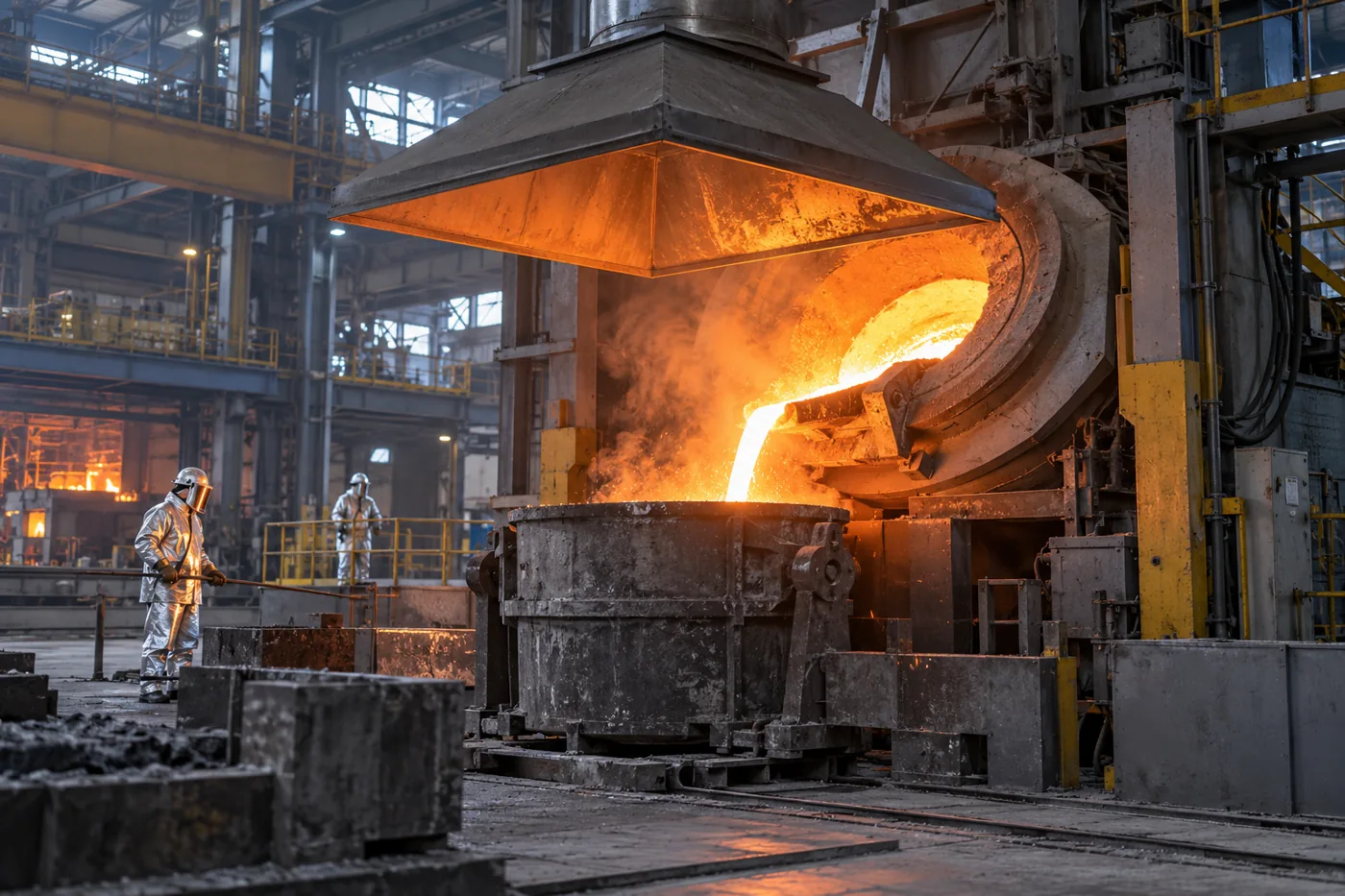
A filter may remain mechanically available yet fail to keep pace with current production. Capacity expansion, the addition of capture points, changes in the metallic charge and altered temperatures change the demands on a system designed for different conditions. A retrofit must begin by diagnosing this difference.
It is also necessary to separate design problems from those related to upkeep. Poor sealing, inoperative cleaning and hoppers containing accumulated material can reduce performance without requiring complete replacement. In other cases, insufficient filtration area and inadequate gas distribution require a more extensive modification.
Characteristics that guide engineering
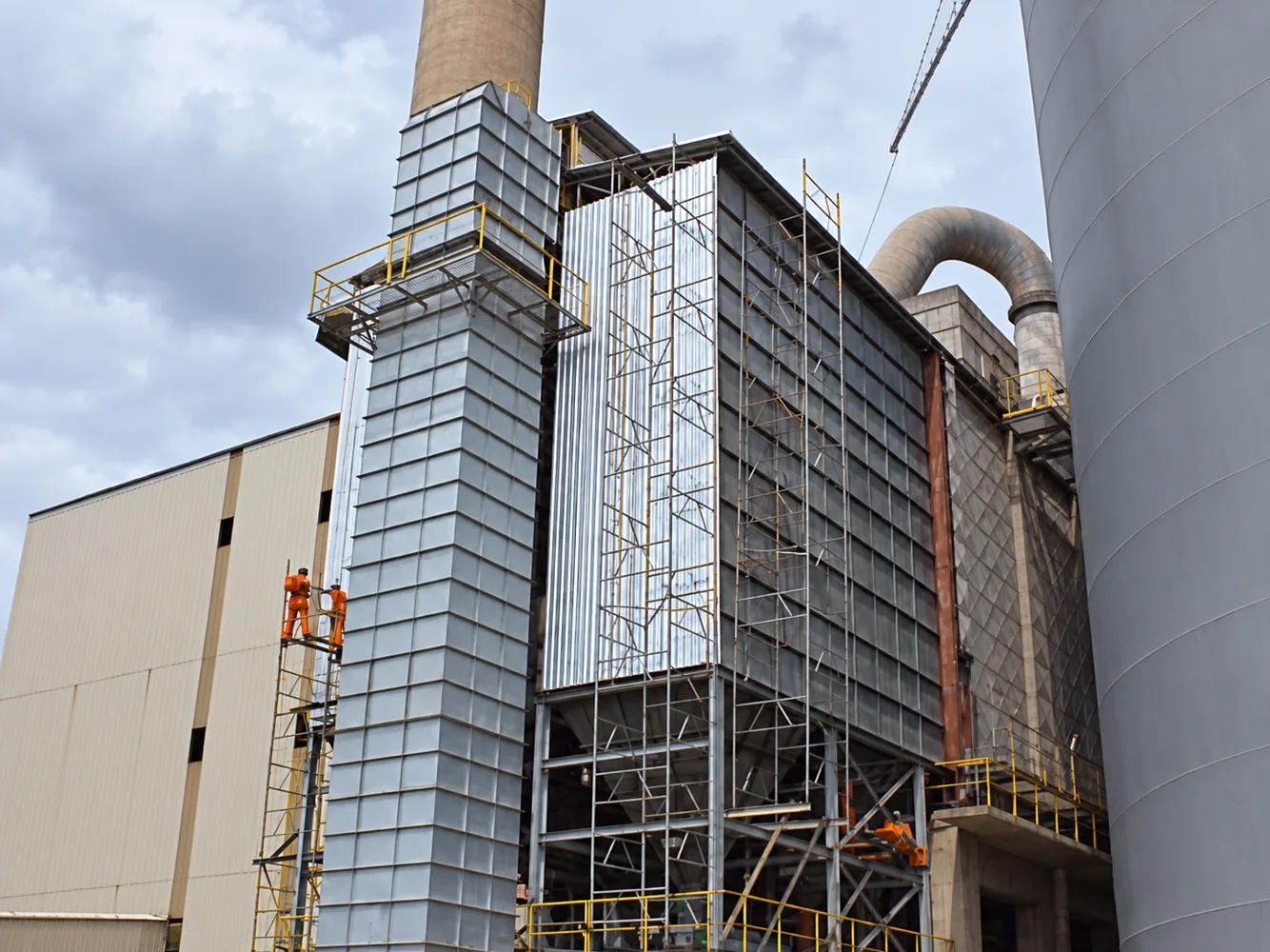
Reusing casings and hoppers can reduce procurement, material and installation requirements. Feasibility depends on structural integrity, internal space, gas distribution and the ability to install adequate filtration area, cleaning systems and access.
Solution configuration and sizing
Engineering must assess the existing structure, compartment configuration and access conditions. Reusing the casing is beneficial only if it allows a coherent solution for gas entry, separation of dirty and clean sides, cleaning and discharge. Casing and hopper extensions may be necessary to adapt velocities and capacity.
Existing fans must be reassessed against the new system curve. A larger motor does not resolve every airflow deficiency, and increasing speed may exceed mechanical limits. Depending on the analysis, upgrading may include the impeller, drive, instrumentation or fan replacement. Civil, electrical and installation interfaces must be included in the scope and shutdown plan.
Design parameters
| Parameter | How to assess it | Engineering decision |
|---|---|---|
| Structural condition | Inspect casing, hoppers and supports | Define the extent of reuse |
| Current demand | Measure airflow, dust and temperature | Define necessary adaptations |
| System curve | Recalculate with the new filter | Check fan and drive |
- Measure airflow and pressure drop.
- Check dust loading and characteristics.
- Reassess the fan.
- Plan shutdown and commissioning. Energy and economic benefits must be calculated for each scenario.
Performance, diagnostics and maintenance
Performance must be compared under equivalent production conditions, considering source capture, emissions, differential pressure and overall consumption. Reuse offers the possibility of reducing procurement, material and installation costs, but does not justify a fixed savings percentage.
During commissioning, it is important to confirm tightness, airflow distribution, cleaning and solids removal before considering the work complete. When a fault remains after upgrading, operating records help distinguish a startup adjustment from a limitation that still exists in the process or capture network.
Planning the intervention
The scope must include dismantling, inspections and installation interfaces as well as component supply. An early assessment of reused structures helps reduce unexpected issues and organize the shutdown window according to the facility's constraints.
Further technical reading
Does your process need an assessment?
Talk to Kleema engineering about sizing, modernization and operating conditions.
Talk to engineering ↗