Steel industry
Thermal control of gases in the steel industry: dilution and cooling
Gas temperature must be compatible with the limits of the filter, ducts and fan. Thermal conditioning must accommodate process variations and avoid conditions conducive to condensation.
The process and emission sources
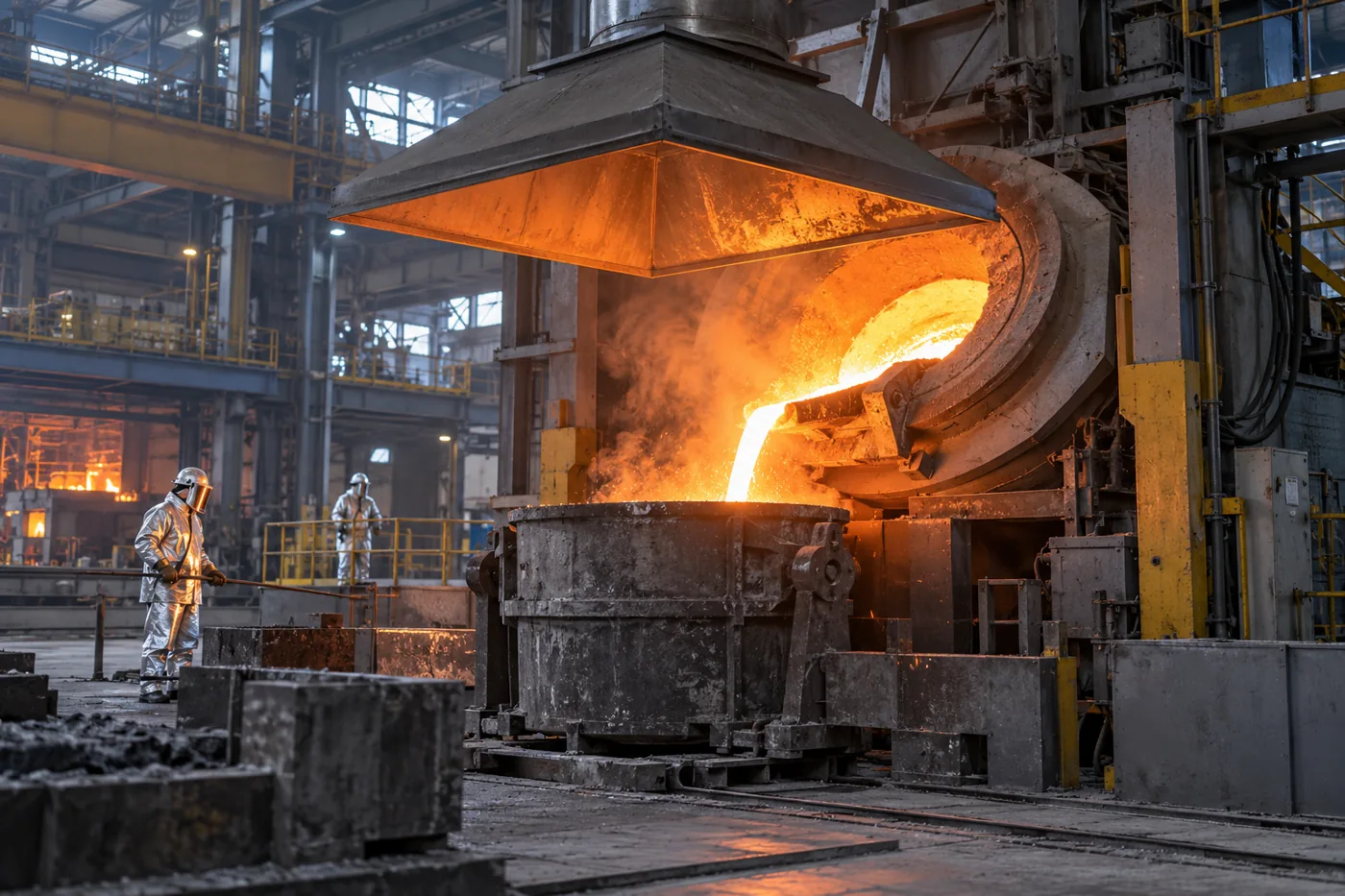
Gases from steelmaking processes can reach treatment at temperatures incompatible with the filter medium. Conditioning must reduce this thermal load without creating another problem, such as excessive flow, condensation or deposition. The solution depends on the heat balance and composition, rather than an isolated maximum temperature alone.
Startups, charge changes and furnace events can have different durations and intensities. The design must understand these conditions to assess response, capacity and control integration. A device effective under steady conditions may not respond in the same way to a rapid transient.
Characteristics that guide engineering
Dilution with ambient air increases the flow to be treated. Natural and forced convection have different space and energy requirements. Water-spray cooling may be assessed where the process accommodates this solution and its evaporation conditions.
Solution configuration and sizing
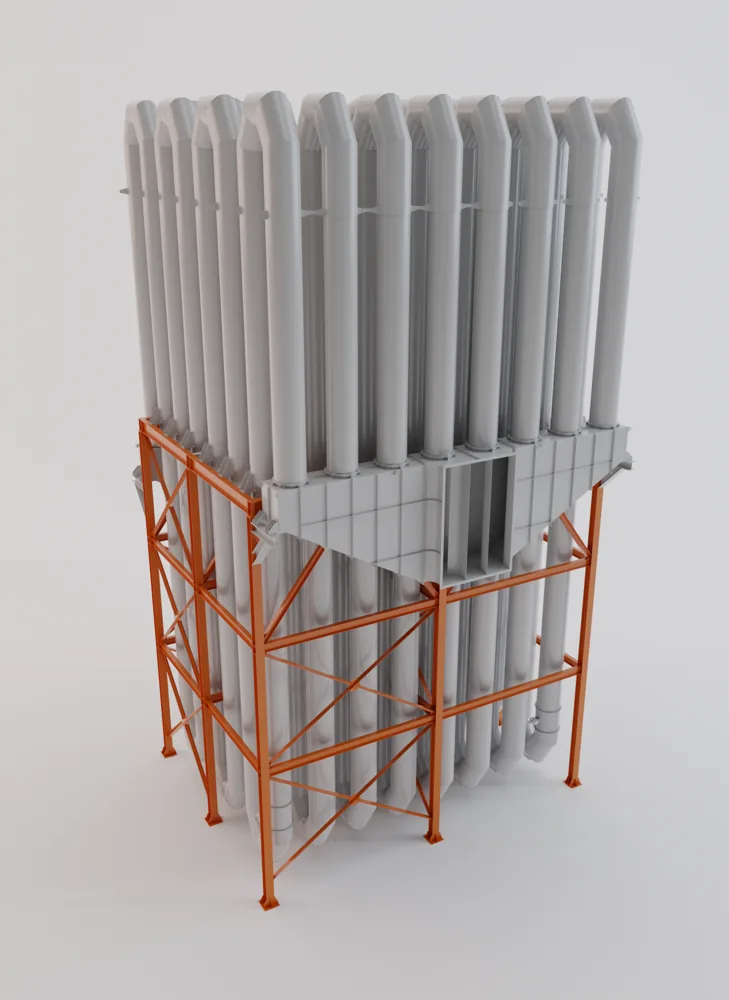
Dilution admits ambient air and increases the mass and volume of gas treated. This may require greater filter, duct and fan capacity. Natural-convection coolers transfer heat without forced external ventilation, but depend on area, ambient conditions and flow characteristics. Forced convection uses auxiliary ventilation and adds consumption and maintenance.
With water spray, evaporation can provide rapid cooling where compatible with the process. Atomization, contact and final gas conditions must be sized to avoid carrying liquid to the dry filter. Each alternative must be compared as a whole: final temperature, flow rate, moisture, space, pressure drop and utilities.
Design parameters
| Parameter | How to assess it | Engineering decision |
|---|---|---|
| Thermal profile | Establish steady and transient conditions | Size response and capacity |
| Final flow rate and moisture | Prepare a balance for each alternative | Match filter and fan |
| Utilities and space | Compare water, energy and area | Assess overall system cost |
- Establish normal and transient temperatures.
- Compare alternatives through the heat balance.
- Check filter and fan capacity.
- Integrate measurement, alarms and protective actions. Selection must also consider gas moisture and composition.
Performance, diagnostics and maintenance
Performance must be monitored at the conditioning inlet and outlet and related to process conditions. Measurement at a single point may fail to reveal inadequate thermal distribution or differences between regions. Sensor location and response logic must reflect the design.
Alarms and protective actions must consider component limits and the times involved. Economic assessment includes energy for the main fan and auxiliaries, water and maintenance. Choosing the alternative with the lowest initial investment without checking these effects may limit operation or increase costs throughout use.
Effects on the installation
The heat balance must be accompanied by a flow balance and moisture verification. An alternative that reduces temperature may increase fan demand or bring the gas closer to a condition unsuitable for the filter medium.
Further technical reading
Does your process need an assessment?
Talk to Kleema engineering about sizing, modernization and operating conditions.
Talk to engineering ↗