Cement
Converting an electrostatic precipitator to a bag filter: what to assess
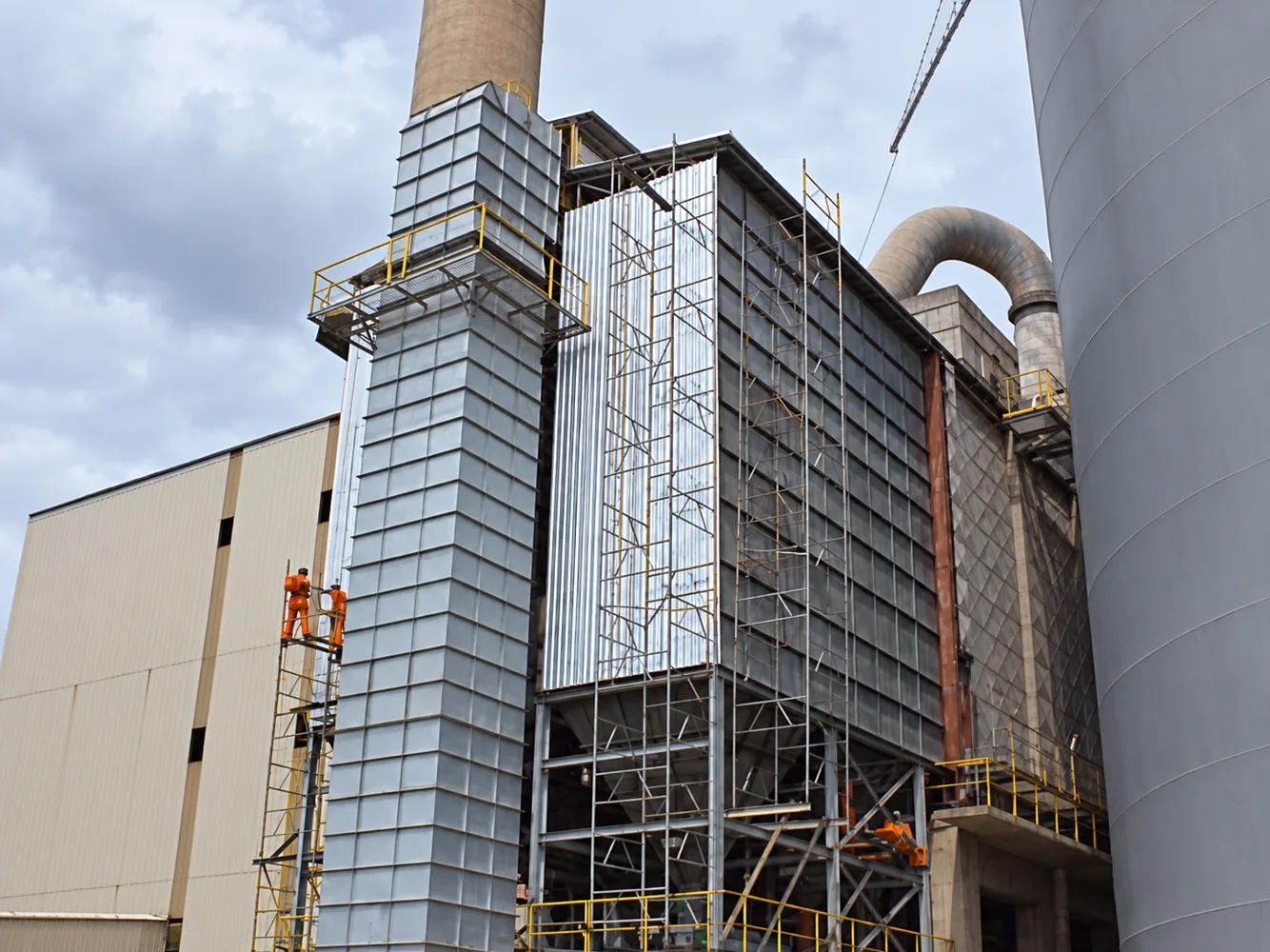
Converting an electrostatic precipitator to a bag filter can reuse part of the existing installation and adapt collection to new process conditions. The decision requires comparing modernization, retaining the current system and complete replacement.
The process and emission sources
An electrostatic precipitator and a bag filter remove particles through different mechanisms. The former relies on electrical charging and collection on surfaces; the latter uses a porous barrier and the dust layer formed on the medium. The choice between retaining, converting or replacing must consider the process and installation condition, without assuming that one technology is always unsuitable.
Changes in dust composition, unstable operation and maintenance difficulties may prompt a retrofit assessment. The analysis must identify which limitations belong to the collector and which lie in capture, conditioning or ventilation.
Characteristics that guide engineering
Casings, hoppers and structures should be reused only after assessment of integrity and geometric compatibility. Conversion may require extensions, a new plenum, cleaning and adaptation of the fan to the resulting pressure drop.
Solution configuration and sizing
Reuse of the casing and hoppers depends on integrity, dimensions and gas-distribution conditions. Extensions may need to be fabricated to obtain adequate filtration area and internal velocities. Conversion also involves separation of dirty and clean sides, bag and cage mounting, a plenum and a cleaning system.
The new pressure drop must be included in assessment of the fan and drive. Reducing consumption in the precipitator's electrical stage does not automatically mean reducing overall energy consumption: ventilation and compressed air must form part of the balance. Civil interfaces, removal of internals and the installation sequence determine an important part of intervention cost and duration.
Design parameters
| Parameter | How to assess it | Engineering decision |
|---|---|---|
| Existing structure | Inspect and check geometry | Define reusable parts |
| Velocities and area | Recalculate for the new filtration arrangement | Adapt casing, hoppers and plenum |
| Energy and shutdown | Compare the complete system and installation | Estimate actual retrofit feasibility |
- Check flow rate and internal velocities.
- Define filtration area and access.
- Plan removal of internals and installation.
- Compare procurement, material and shutdown costs. Energy savings are not automatic: ventilation and compressed air belong in the balance.
Performance, diagnostics and maintenance
Acceptance criteria must include emissions, flow rate, differential pressure, discharge and stability in relevant modes. Higher retention is insufficient if conversion limits process draft. Likewise, maintaining flow rate with high consumption may indicate an opportunity for adjustment.
Savings in procurement, material and installation must be calculated based on the reused scope and necessary extensions. There is no fixed percentage of reuse or financial return applicable to every plant. Results must be demonstrated by comparing alternatives and confirmed during commissioning and operation.
How to compare modernization alternatives
A feasibility study can compare three scenarios: refurbishing the existing electrostatic precipitator, converting it to bags or replacing it with new equipment. All must be evaluated for the same process conditions and performance target. Otherwise, an apparently cheaper alternative may be delivering a different capacity.
For a retrofit, the budget must separate inspection and structural reuse, casing and hopper extensions, internals, plenum, cleaning, fan and installation. Replacement also includes equipment removal, new interfaces and any civil work. In both cases, shutdown duration and risk must be assessed.
Operating costs must include energy, compressed air, component replacement and maintenance. The facility's history helps estimate these portions. The decision must show where savings come from and which conditions must be maintained to achieve them, rather than using a generic investment-reduction percentage.
Commissioning after conversion
Startup must verify tightness, direction of rotation, cleaning, discharge and flow distribution. Emission and operating results must be related to the process conditions used during testing.
Further technical reading
Does your process need an assessment?
Talk to Kleema engineering about sizing, modernization and operating conditions.
Talk to engineering ↗