
LIASA
Silica fume densification that cuts costs and pays for itself
At LIASA, silica fume densification turns lower material volume into transport and storage savings. Savings in these two cost categories alone pay for the investment in the system developed by Kleema.
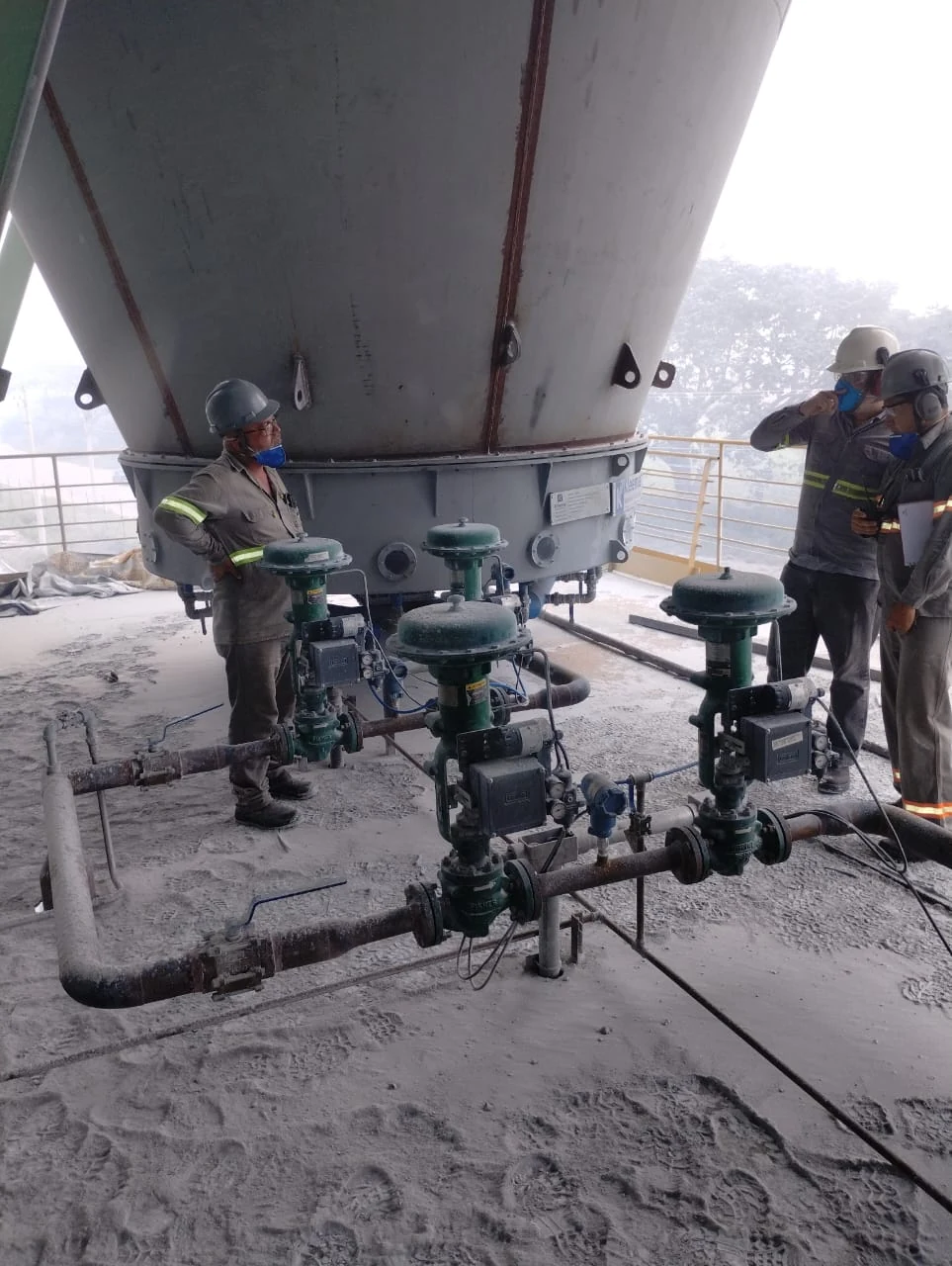
Integrated system: silo, bin vent filter, densification cone and pneumatic silo feeding.
- Client / location
- LIASA · Pirapora, Brazil
- Material
- Silica fume
- Initial bulk density¹
- 250–270 kg/m³
- Verified bulk density²
- 539–618 kg/m³
Cost reduction and investment payback
Logistics and storage savings alone pay for the investment in the system. By increasing silica fume bulk density, densification reduces the space required to move and store the same mass of material. The economic benefit comes from better use of transport volume capacity and storage space.
The challenge: moving and storing a low-density powder
Silica fume’s low bulk density means a relatively small mass occupies a large volume. In space-limited operations, this reduces the use of packaging, storage space and transport volume capacity. Sensitivity to moisture adds the need to prevent agglomeration and caking that can hinder material flow.
The solution: integrated receiving, vent filtration and densification
The system combines a storage silo, pneumatic feeding, a bin vent filter and a densification cone. The filter retains particles from air displaced during silo filling, while the cone densifies the material. This integrates silica fume receiving with preparation for discharge and dispatch.
Commissioning two cones with assisted operation
The technical report documents supervision of commissioning and start-up of the cones on Silos 1 and 2, from 16 to 19 April 2024. Work included valve and instrument checks, pressure and flow control-loop adjustments, start/stop tests and monitoring of automatic operation through the supervisory system.
Verified result: 539–618 kg/m³
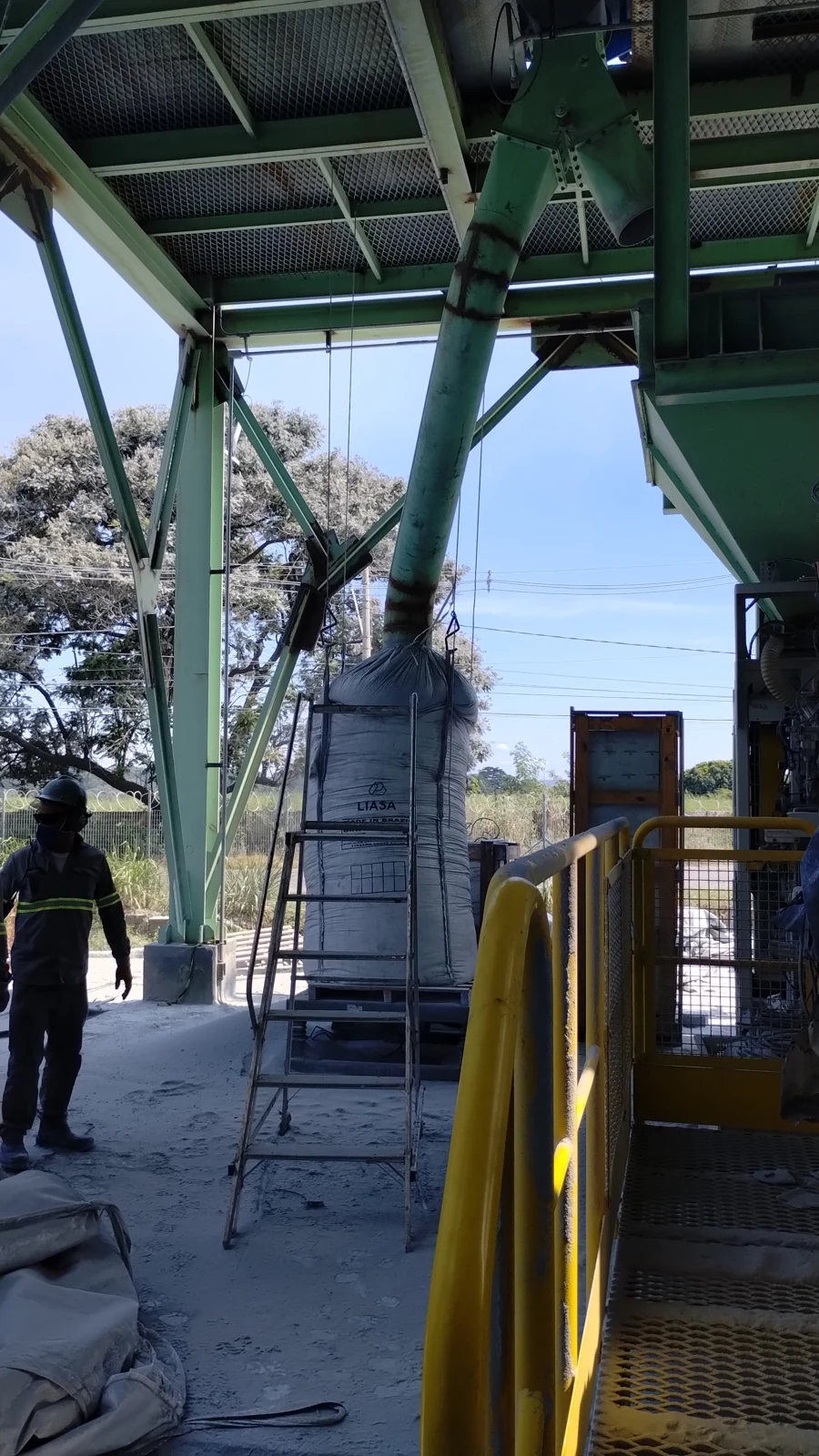
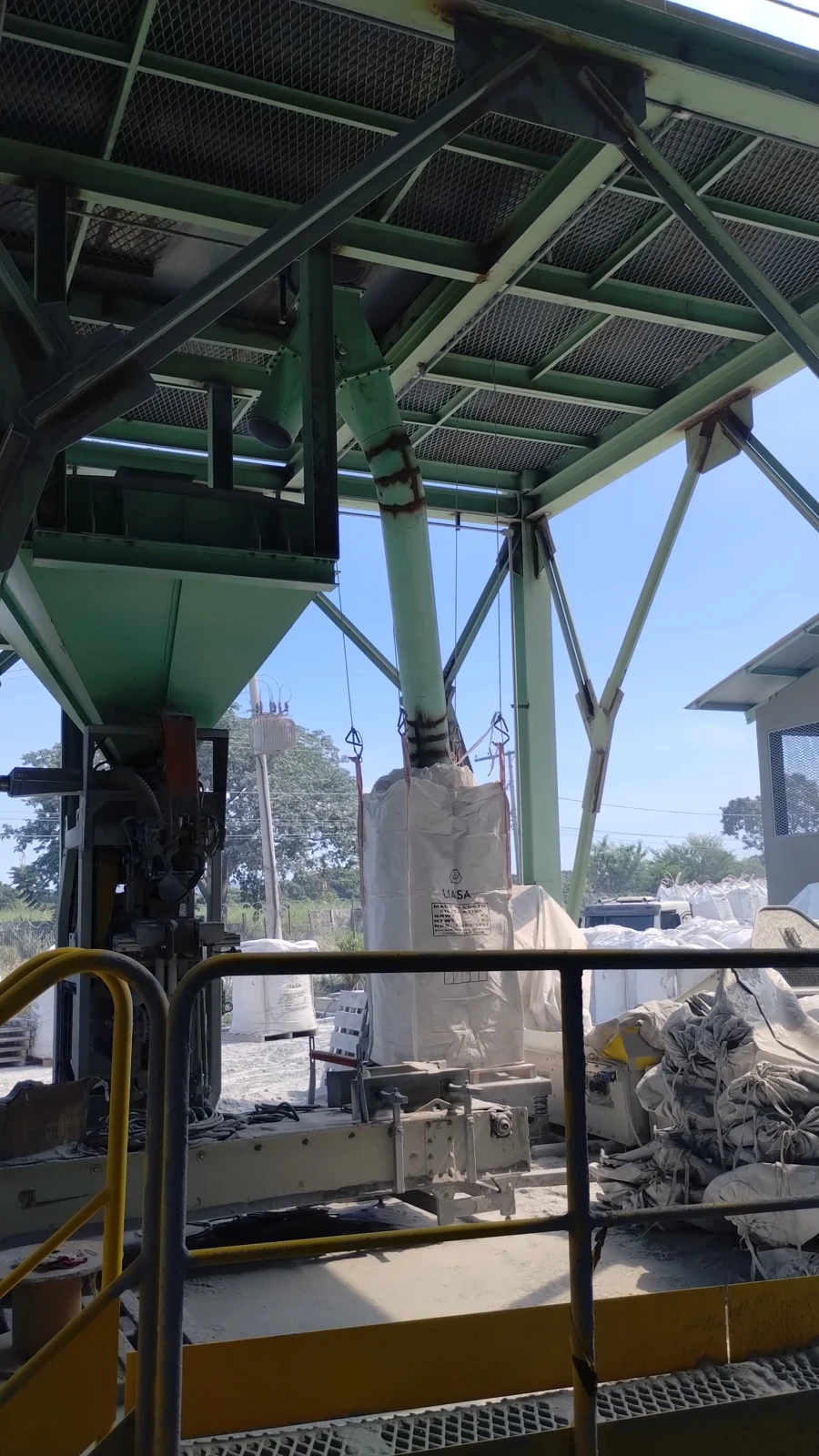
From an initial bulk density of 250–270 kg/m³ reported by the client, commissioning checks recorded 539–618 kg/m³ after approximately 17 hours of residence under the test conditions. The design range of 500–600 kg/m³ was reached. The report also records removal of approximately eight 1.78 m³ bulk bags from Silo 1, about 14 m³, while maintaining density within the observed range.
What this means for logistics
Using the relationship between mass, density and volume, these ranges correspond to approximately 50–60% less volume for the same mass when comparing initial and densified material. This improves space use when an operation is volume-limited.
Conditions for sustained performance
Commissioning highlighted the importance of dry, oil-free compressed air, assembly sealing, reliable instrumentation and sufficient air availability for simultaneous cone operation. Residence-time control and regular material discharge were also important to avoid excessive densification and caking.
Basis of the figures
¹ Initial density reported by the client. ² Density checked during commissioning using samples removed for weighing; this does not guarantee uniform density throughout the silos. Volume reduction is calculated using V = mass / density, or 1 − initial density / final density. Technical source: visit report CT223102, issued 8 May 2024.
System engineering
| Pneumatic feeding | Silica fume transfer to the silo, integrated with material receiving. |
|---|---|
| Silo and bin vent filter | Intermediate storage with particle retention from air displaced during filling. |
| Densification cone | Increasing bulk density to reduce the volume occupied by the same mass of material. |
| Instrumentation and automation | Cone air pressure and flow control, with loop tuning and supervisory monitoring. |
| Operation and care | Attention to moisture, compressed-air quality, residence time and discharge routines. |
Commissioning photographs
Is your silica fume taking up more space than it should?
Talk to Kleema to assess how volume reduction could translate into transport and storage savings for your operation.
Talk to our engineers