Metallurgy
Metal particles and gases: how to define treatment
Machining, rolling and heat treatment can generate dusts, mists and gases. Correctly identifying the contaminant phase is the first step in selecting the appropriate technology.
The process and emission sources
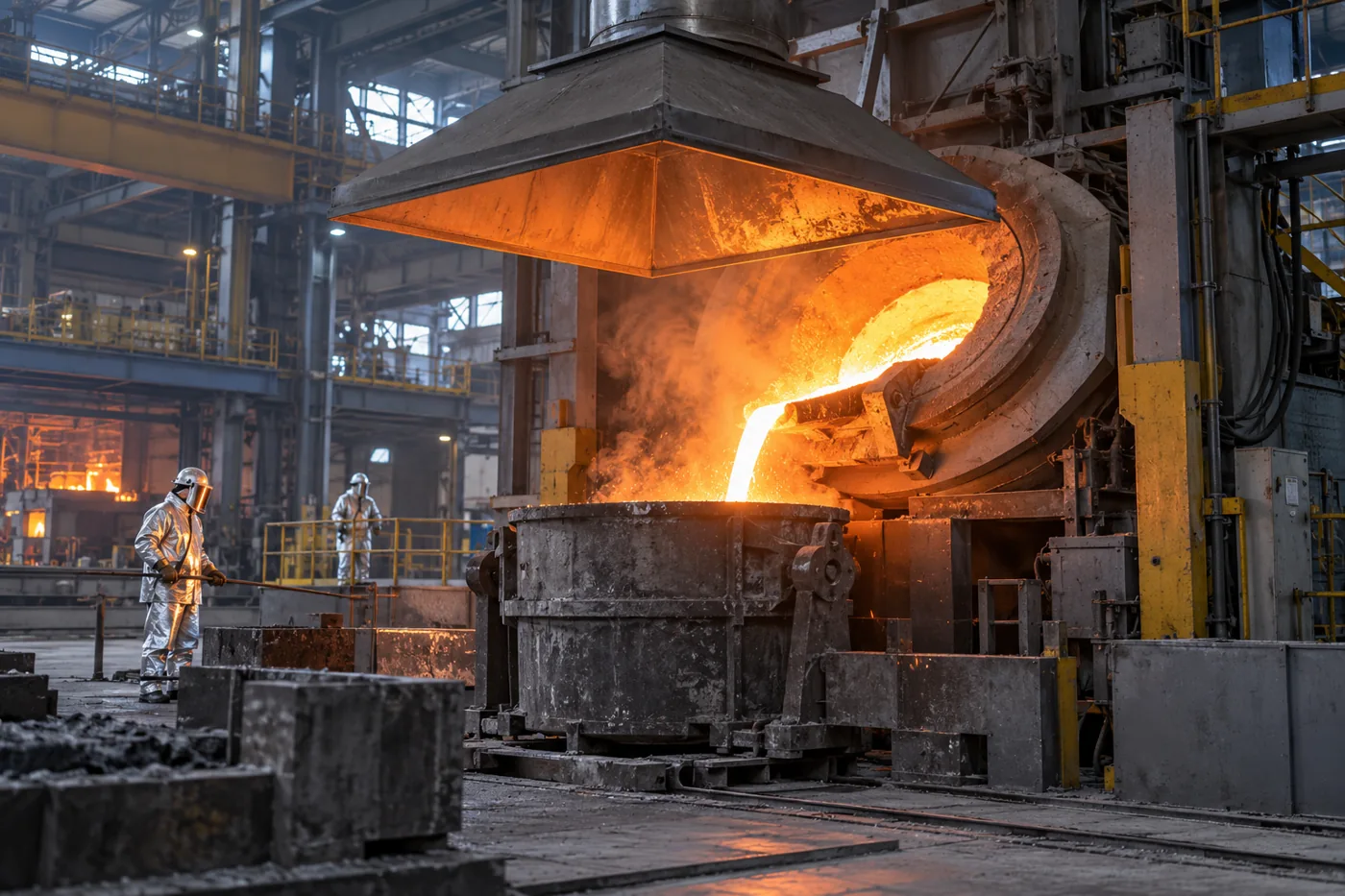
Metalworking operations can generate solid particles, condensation fumes, fluid mists and gases. In machining, the use or absence of fluid changes the problem; in rolling, oils and heating add another condition; in heat treatment, the atmosphere and workpiece coatings also influence emissions.
This distinction defines the separation mechanism. Dry dust may require a particle collector, while mists need technology suited to the presence of droplets. Treatment temperature can shift some of a contaminant between the vapor and condensed phases.
Characteristics that guide engineering
A bag filter is intended to retain particles and should not be presented as a universal solution for toxic gases or oily mists. Depending on the stream, mist separators, adsorption or other stages may be necessary.
Solution configuration and sizing
The survey must identify substances, physical state, particle size distribution and thermal conditions. Only then is it possible to define whether circuits should be segregated or combined. Mixing an oily stream into a dry-dust network can encourage adhesion and change cleaning, disposal and protection requirements.
Bag and cartridge filters may be included in applications involving compatible particulate matter. Where gases require treatment, adsorption, neutralization or other technologies must be assessed according to the contaminant. The downstream collector may retain solids associated with treatment, but it should not be credited with universal removal of toxic gases.
Design parameters
| Parameter | How to assess it | Engineering decision |
|---|---|---|
| Contaminant state | Distinguish dust, mist and gas | Choose treatment mechanism |
| Compatibility between streams | Assess oil, moisture and reaction | Define segregation |
| Outlet pollutants | Use specific checks | Confirm the required performance |
- Characterize metals, fluids and temperatures.
- Assess incompatibilities between streams.
- Define recovery and disposal.
- Verify capture at emission points and access conditions for cleaning.
Performance, diagnostics and maintenance
Performance must be verified using indicators appropriate to each pollutant. Absence of visible dust does not demonstrate absence of vapor or mist, and stable differential pressure does not prove the integrity of every stage. Assessment must distinguish source capture, treatment and the destination of removed material.
Maintenance conditions deserve attention because the residue may concentrate metals and other contaminants. Cleaning, container removal and contact with internal surfaces must be considered in the design. Technology selection reduces uncertainty when it starts from the actual stream rather than merely the name of the metallurgical sector.
Stream segregation
Mixing metal dust, mist and gases from different processes can complicate treatment and disposal. Circuit separation must be assessed before choosing collection technology and construction materials.
Further technical reading
Does your process need an assessment?
Talk to Kleema engineering about sizing, modernization and operating conditions.
Talk to engineering ↗