Metallurgy
Particle control in ferroalloy reduction furnaces
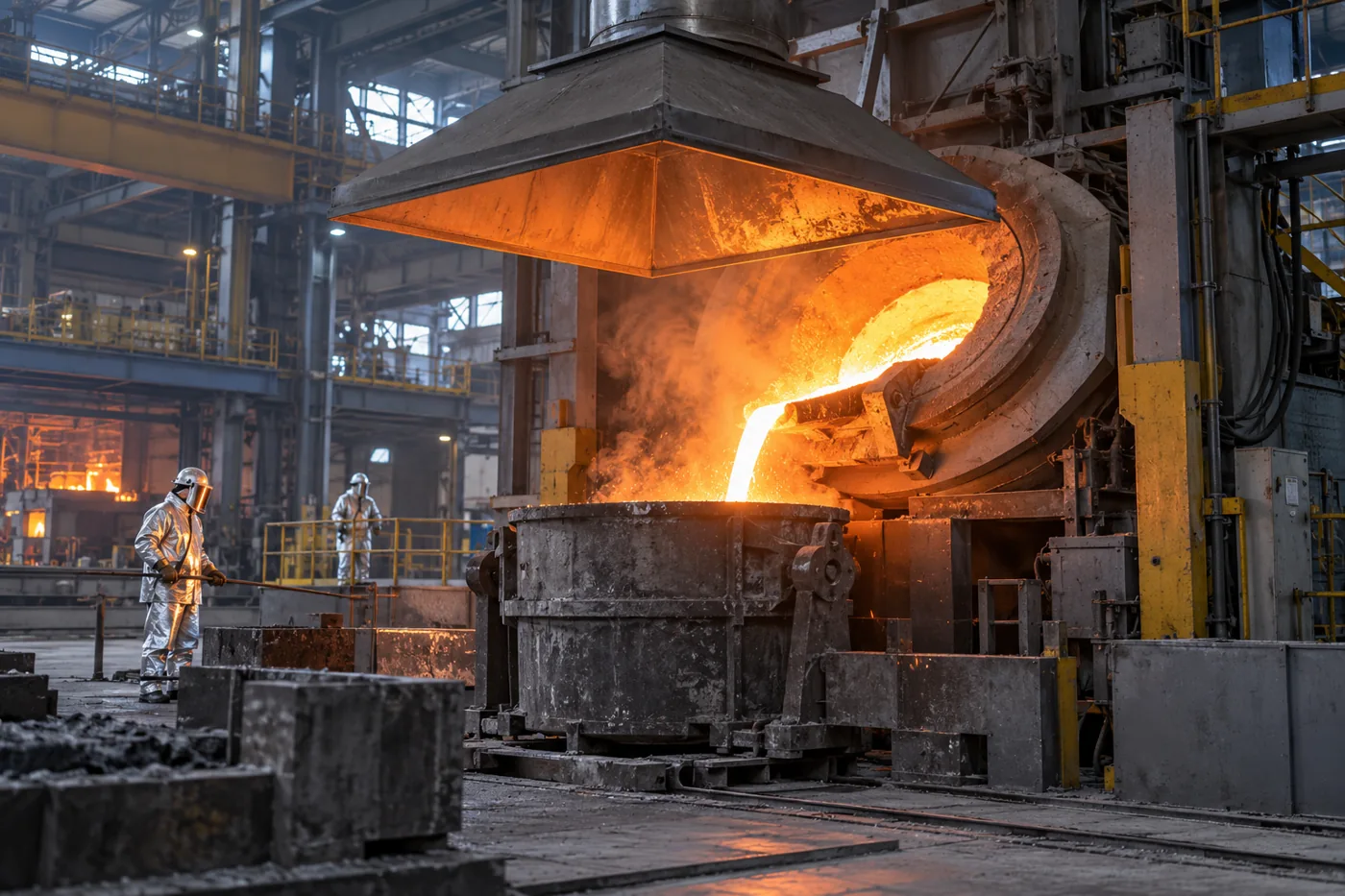
Reduction furnaces can generate streams containing fine fumes, high temperatures and variations in composition. Capture and treatment must be defined by furnace type, raw material and whether the process configuration is open or closed.
The process and emission sources
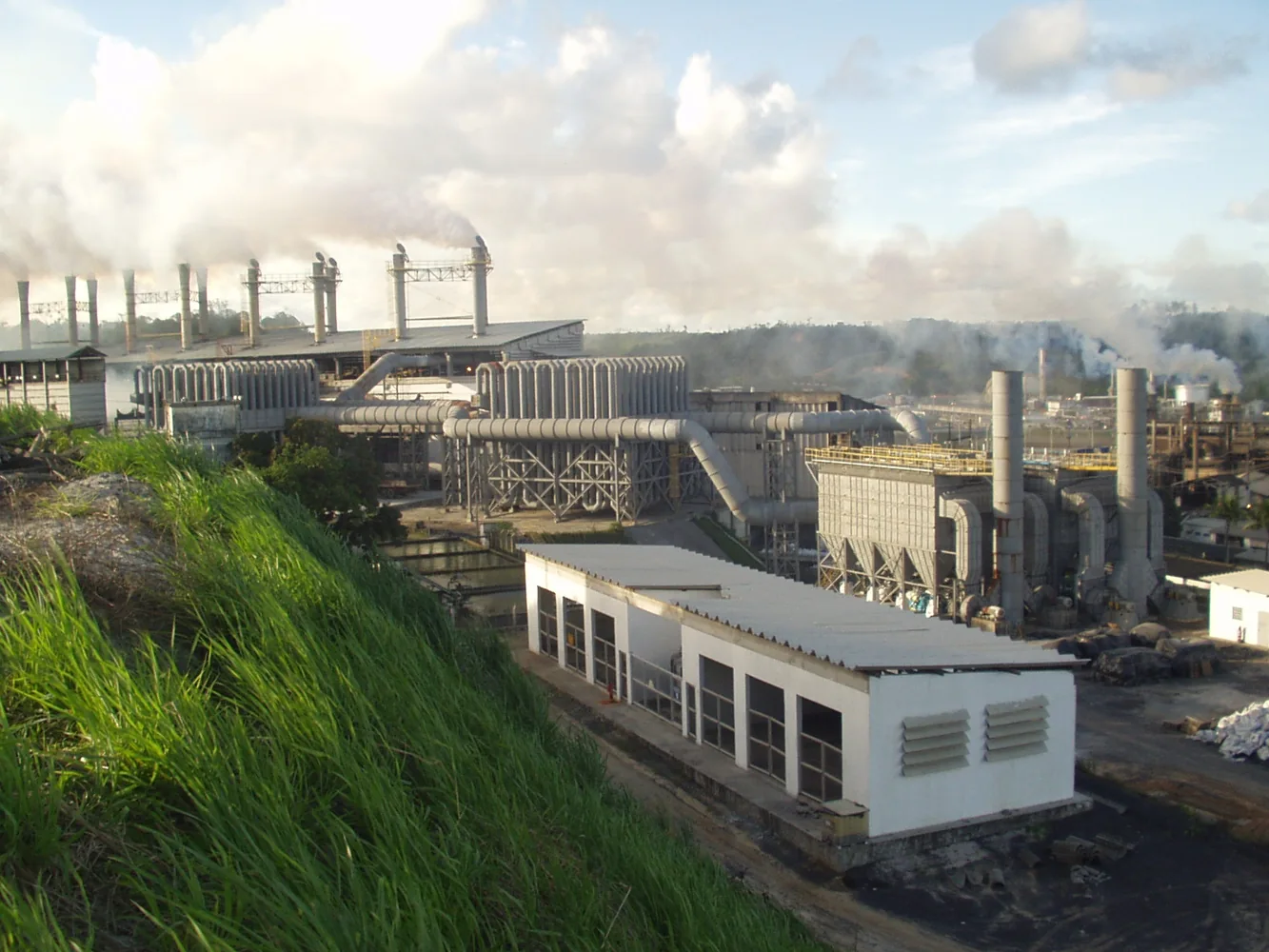
In ferroalloy reduction furnaces, raw materials, the reductant and thermal conditions determine fume formation and solids entrainment. Furnace type and capture configuration change the flow rate, temperature and composition of the stream. It is inappropriate to transfer an open-furnace design directly to a closed or semi-closed circuit.
Some of the material may be fine and have a low bulk density, requiring attention to gas distribution, cleaning and flow through hoppers. Gaseous components that will not be retained by mechanical filtration may also be present, including streams with energy value or specific hazards.
Characteristics that guide engineering
Particulate matter, combustible gases and gaseous contaminants do not receive the same treatment. The design must consider thermal conditioning, filter protection and the specific requirements for streams containing CO or other gases of interest.
Solution configuration and sizing
The treatment sequence must distinguish capture, conditioning and collection. Pre-collectors may be useful for coarse fractions or to reduce certain loads on the filter, but they do not remove every contaminant present. Coolers must be sized for the expected operating regimes without introducing condensation or excessive flow to the collector.
The filtration area and upward velocity must allow gas passage and the fall of released material. Cleaning and discharge must be selected for the behavior of the dust, including its tendency to bridge or remain aerated. If material recovery is desired, the solution must preserve its quality and prevent mixing with residues from other stages.
Design parameters
| Parameter | How to assess it | Engineering decision |
|---|---|---|
| Furnace configuration | Identify capture arrangement and composition | Define the treatment circuit |
| Fine, aerated dust | Assess flow and re-entrainment | Size filter and discharge |
| Production regimes | Record charge and events | Interpret performance and transients |
- Characterize cycles and emission peaks.
- Assess pre-separation.
- Size filtration area and discharge.
- Check materials, expansion and monitoring. Dust recovery depends on material characteristics and its intended destination.
Performance, diagnostics and maintenance
Assessment must relate emissions and operating signals to furnace cycles, charge composition and reductant condition. A result obtained under steady operation does not automatically represent startup events or process disturbances. Operating logic must define how these situations will be monitored.
It is important to measure capture efficiency and filter retention separately. If the plume escapes before entering the network, increasing filtration area may not resolve emissions into the surroundings. The solution depends on integration with the furnace and on the conditions actually characterized.
Solids collection and destination
Ferroalloy dust may be a material of interest or a residue requiring specific handling. Discharge and storage arrangements must follow this classification and the physical and chemical characteristics of the collected material.
Further technical reading
Does your process need an assessment?
Talk to Kleema engineering about sizing, modernization and operating conditions.
Talk to engineering ↗