Pharmaceuticals and laboratories
Filtration in pharmaceutical laboratories: capture and exposure
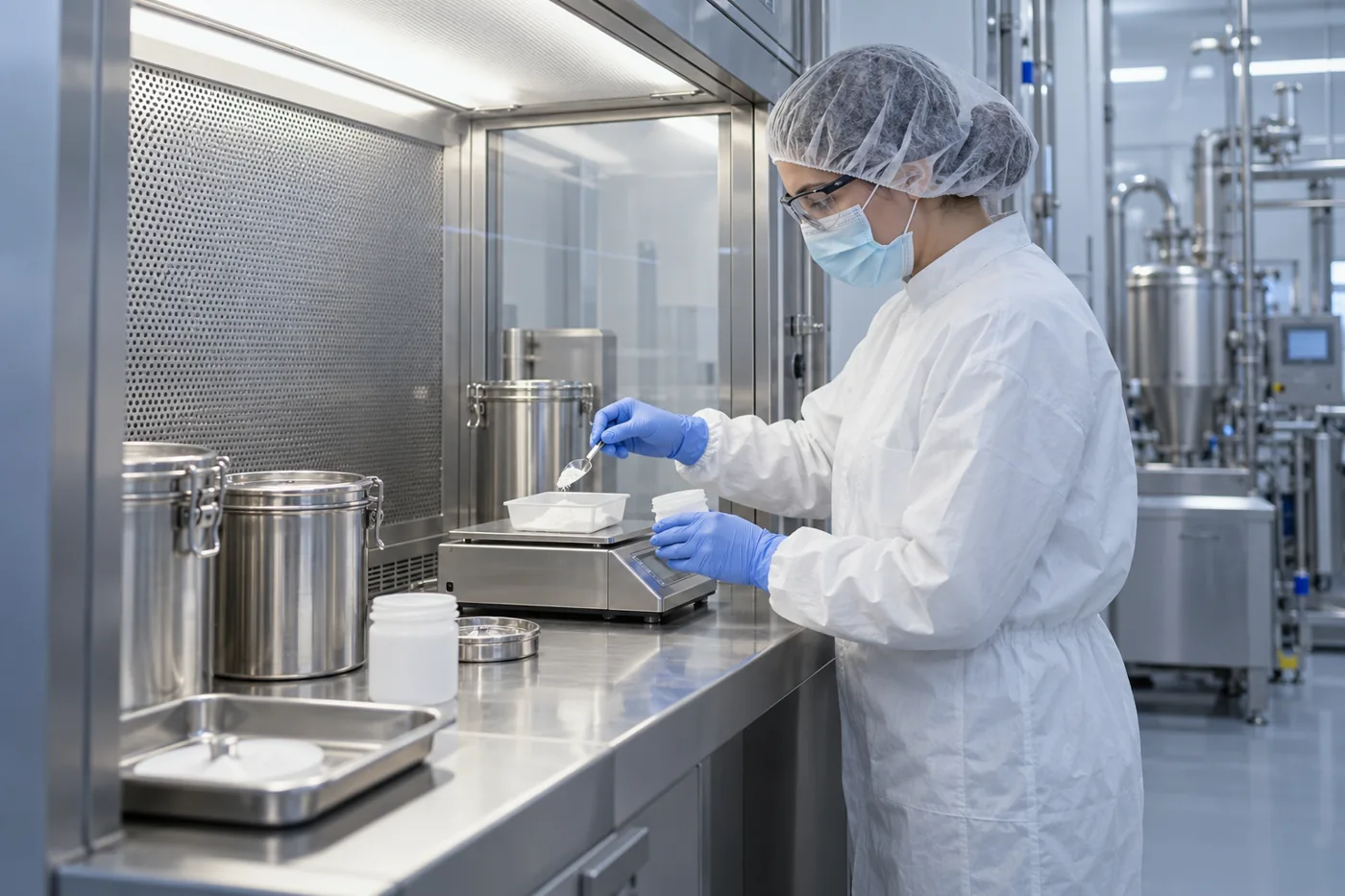
Weighing, sample preparation and powder handling can produce localized exposure in pharmaceutical laboratories. The solution must be selected according to the substance, quantity handled and procedure performed.
The process and emission sources
In a laboratory, emissions may occur during a short task, such as transferring a sample to a balance, rather than throughout the working day. The proximity of the source to the breathing zone makes hood position and handling method important. The substance, quantity and frequency of use must be known before selection.
Powders must also be distinguished from vapors. A procedure involving dry powder may be served by a capture and filtration strategy; the same bench used with solvents requires a different assessment. Sharing a circuit without analyzing the substances can create incompatibility or compromise containment.
Characteristics that guide engineering
Compact filters can serve certain low-airflow extraction applications, but do not replace booths or containment where these are necessary. Solvent vapors require their own technology, distinct from dust retention.
Solution configuration and sizing
The solution may involve a booth, partial enclosure or local capture, depending on the required level of control. A compact collector is useful where airflow and material permit, but its size does not establish suitability for the risk. Airflow must not destabilize weighing or carry the contaminant across the operator's position.
For substances of higher potency, final retention, filter changeout, cleaning and disposal must be defined in a manner compatible with the containment strategy. The equipment must maintain access to components without exposing adjacent areas. Where air recirculation into the room is considered, it requires a specific assessment of contaminants and performance, rather than merely a statement of high nominal efficiency.
Design parameters
| Parameter | How to assess it | Engineering decision |
|---|---|---|
| Task and substance | Define the handling method | Select the containment level |
| Interference with work | Observe airflow and ergonomics | Preserve weighing and capture |
| Maintenance and air return | Assess contaminants and changeout | Prevent dispersion beyond the task |
- Define the source and containment level.
- Assess chemical compatibility.
- Provide safe element changeout.
- Verify capture performance under laboratory conditions of use.
Performance, diagnostics and maintenance
Verification must reproduce the task, including opening and closing containers. Positioning the hood conveniently for testing but differently from everyday use can produce an unrepresentative result. The arrangement of utensils and room air currents must also be observed.
Filter monitoring includes differential pressure and integrity criteria where applicable, but exposure and containment assessments remain separate. The review must be repeated when new substances, quantities or procedures are introduced into the laboratory.
Integration into laboratory routines
The equipment must allow the operator to perform the task in the position intended for capture. The arrangement of utensils and ambient air currents must be observed, as they can change contaminant dispersion.
Further technical reading
Does your process need an assessment?
Talk to Kleema engineering about sizing, modernization and operating conditions.
Talk to engineering ↗