Metallurgy
Fume capture in welding, cutting and foundry operations
Welding, thermal cutting and foundry operations generate fumes and particles with distinct characteristics. Capture must be close to the source and follow the working position without obstructing the process.
The process and emission sources
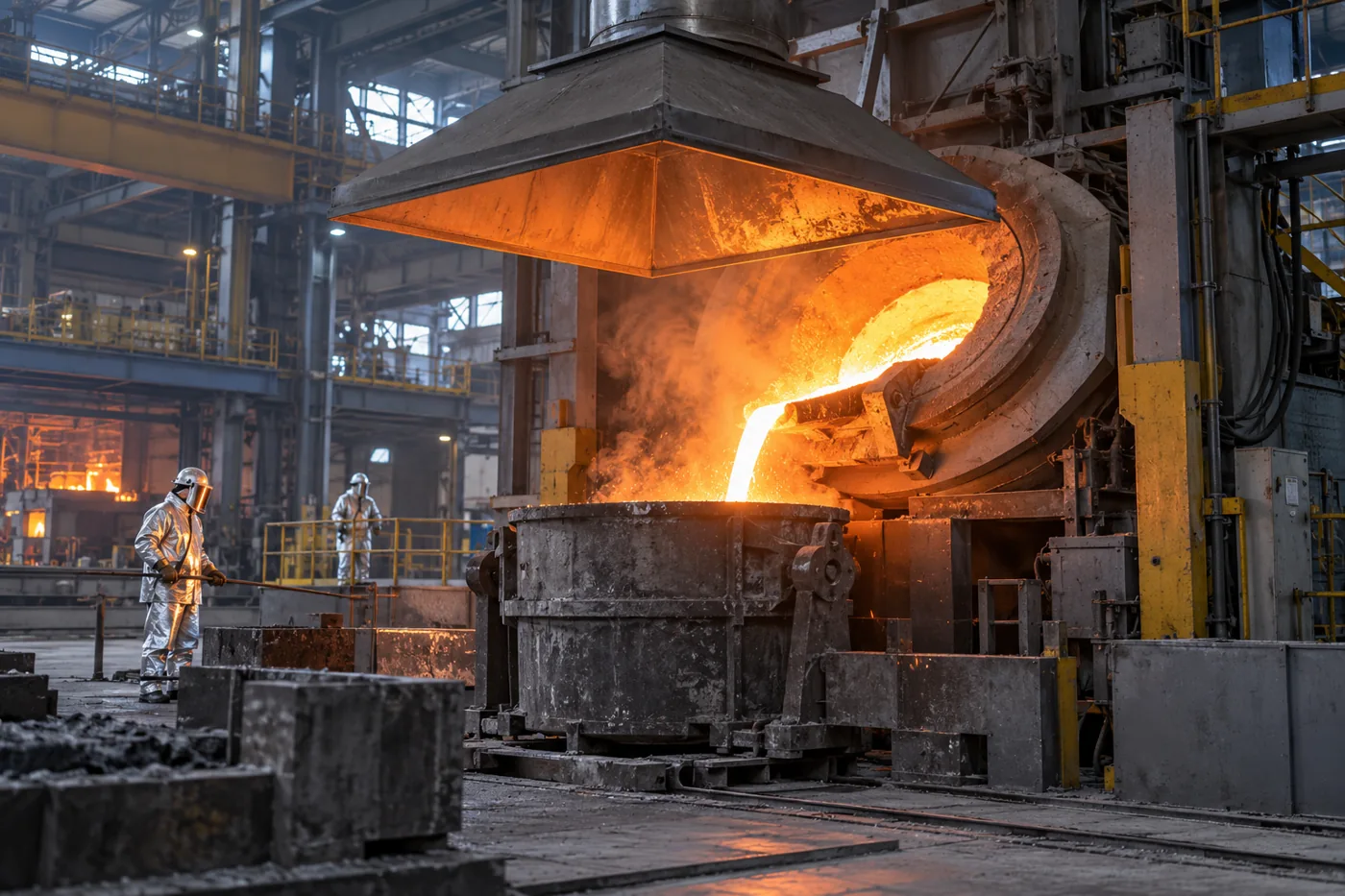
Welding and thermal-cutting fumes are formed through processes different from those producing coarse dust through abrasion or handling. Workpiece metals, consumables, coatings and temperature influence their composition. In foundries, pouring, shakeout and sand handling also generate distinct sources and should not be reduced to a single generic capture arrangement.
The thermal plume and working position determine how the contaminant can reach the operator. A hood that is effective at a workbench may lose its usefulness with large parts or when it does not follow the task's movements.
Characteristics that guide engineering
The system must reconcile mobility, reach and airflow. External air currents can reduce the effectiveness of a hood that appears adequately sized. Filter element selection depends on the metals, consumables and thermal conditions present.
Solution configuration and sizing
Selection must prioritize capture close to the source, using movable arms, extraction benches, hoods or enclosures according to the operation. The emission path must lead to the hood without crossing the breathing zone. In welding, extraction must also be compatible with shielding gas and process quality.
The network must transport material to the collector and account for hot or glowing particles where present. The filter medium and any supplementary stages must be selected for the identified contaminants. Vapors and gases are not eliminated by a conventional dust filter. Residue discharge and handling methods must reflect its composition.
Design parameters
| Parameter | How to assess it | Engineering decision |
|---|---|---|
| Source and composition | Identify process and consumables | Select capture and treatment |
| Hood position | Observe the actual task | Stop dispersion at the source |
| Exposure conditions | Supplement system measurements | Verify control at the workstation |
- Map simultaneously operating workstations.
- Assess movable hoods or enclosures.
- Consider glowing particles.
- Organize discharge and maintenance. Occupational exposure verification complements system assessment.
Performance, diagnostics and maintenance
Verification must observe the task being performed and include representative workpiece and hood positions. An installed movable arm that is routinely kept away from the source may provide little benefit. Ergonomics is part of performance because it influences the ability to use the system correctly.
Airflow and pressure measurements help check the installation, while occupational assessment verifies another aspect of control. Loss of capture may result from cross drafts, obstruction, a change in position or collector resistance. Diagnosis must distinguish these causes before increasing installed power.
Actual workstation conditions
Capture effectiveness must be verified while work is being performed. Changes in position, large parts and cross ventilation may require adjustments to the hood, enclosure or procedure to keep the source within the capture zone.
Further technical reading
Does your process need an assessment?
Talk to Kleema engineering about sizing, modernization and operating conditions.
Talk to engineering ↗