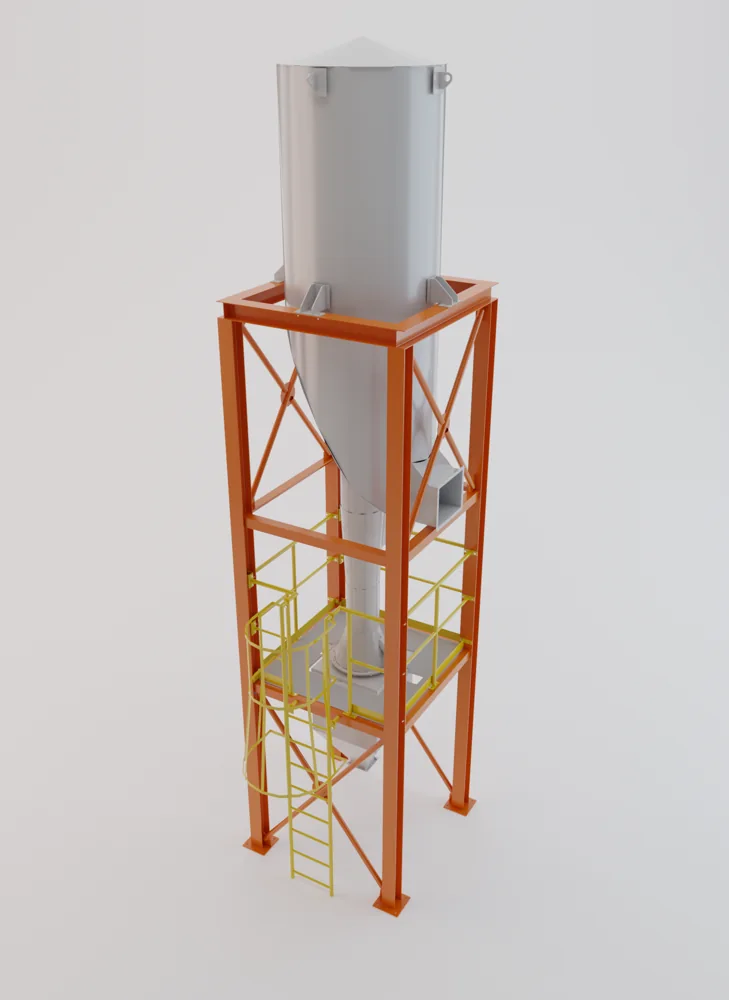
Chemical industry
Combustible dust filtration in the chemical industry
A chemical dust may present a fire or explosion risk depending on its properties and dispersion conditions. Identification of this risk must precede selection of the filter, discharge and duct network.
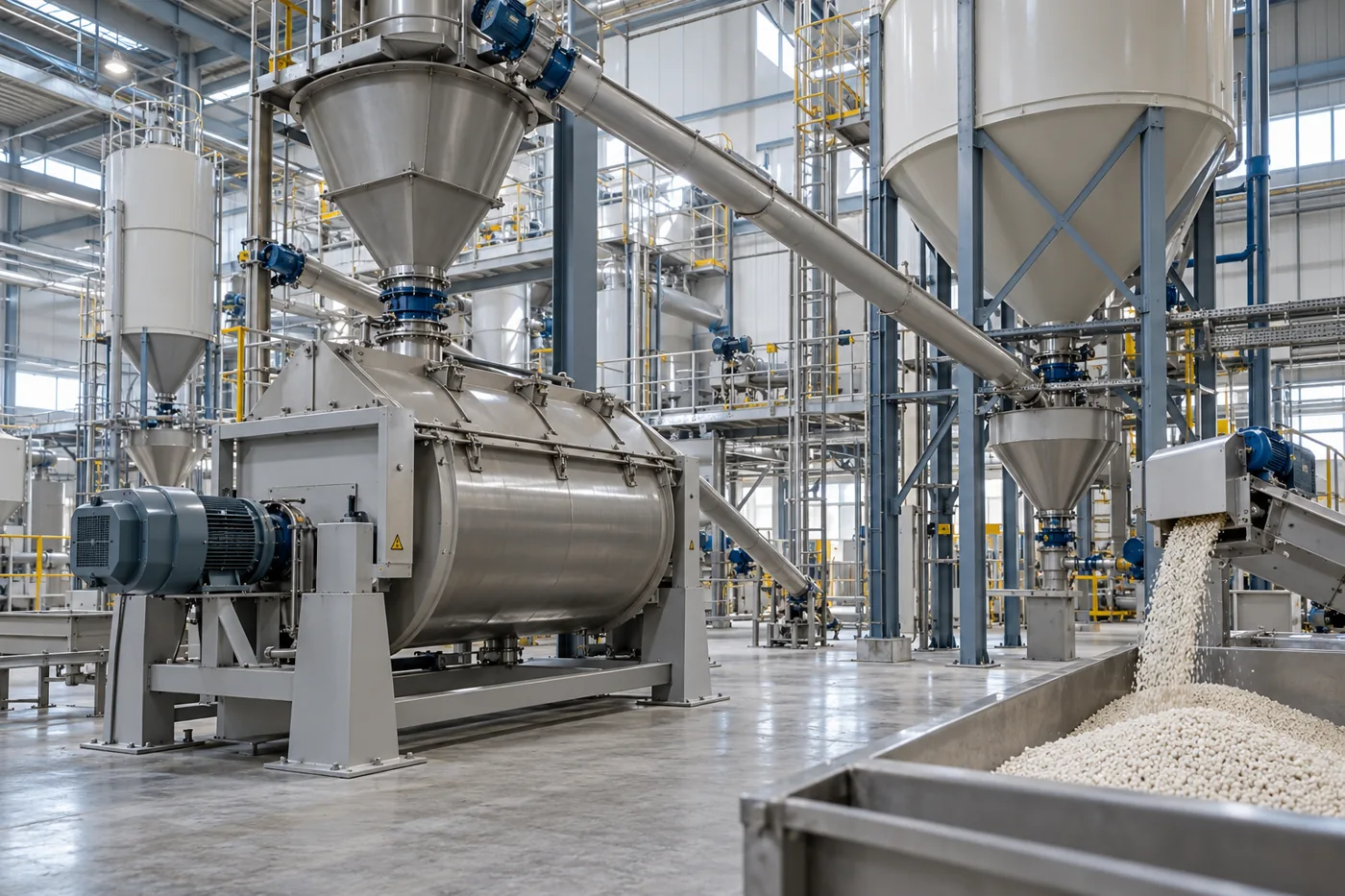
The process and emission sources
The risk associated with a chemical dust depends on properties that cannot be inferred from appearance or trade name alone. Particle size, moisture, composition and the presence of flammable vapors can alter the scenario. Formulation changes or drying can render a previous assessment inadequate.
Filters concentrate collected material and form part of a network of connected equipment. Analysis must therefore consider the source, ducts, collector, discharge and containers, including startup, cleaning and maintenance conditions. A mixture of dust and vapor may require a different approach from that used for dust alone.
Characteristics that guide engineering
The strategy may involve ignition prevention, explosion venting or suppression, and explosion isolation, depending on the analysis. Antistatic components, cyclones and spark arrestors do not individually make an assembly explosion-proof.
Solution configuration and sizing
The strategy must combine control of ignition sources with the protective and propagation-limiting measures required for the scenario. Characterization tests can provide design parameters such as deflagration severity and ignition sensitivity. These results must represent the material actually processed.
Venting, suppression and isolation are neither interchangeable technologies nor universal accessories. Their selection must account for equipment strength, connected pathways and consequences in adjacent areas. Conductive or dissipative filter elements must also form part of a correctly specified system; alone, they do not demonstrate protection against every ignition mechanism.
Design parameters
| Parameter | How to assess it | Engineering decision |
|---|---|---|
| Material properties | Use representative characterization | Define the risk scenario |
| Connected equipment | Map ducts and discharge points | Assess propagation |
| Protection configuration | Check application and maintenance | Preserve demonstrated performance |
- Characterize the dust and process conditions.
- Define suitable protective equipment.
- Check propagation through ducts.
- Establish inspection, cleaning and intervention procedures. Certification and performance must correspond to the specified application.
Performance, diagnostics and maintenance
Verification includes documentation of the configuration, device installation and maintenance conditions stipulated by the responsible technical professionals. Wear, duct alterations and component replacement can change expected performance. The assessment must be reviewed when the process or material changes.
It is important to distinguish collection efficiency from explosion protection. A filter with low emissions may still present an inadequately addressed risk scenario. This article presents engineering criteria for assessment; device specifications and applicable requirements depend on a site-specific analysis.
Protection of the complete system
The performance of a protective device depends on its installation and the conditions for which it was selected. The design must address equipment connections, adjacent areas and maintenance procedures, avoiding consideration of the filter body alone.
Further technical reading
Does your process need an assessment?
Talk to Kleema engineering about sizing, modernization and operating conditions.
Talk to engineering ↗